The Role of Job Title in Pay: A 2026 Guide

Your job title is a direct signal of your seniority, scope of responsibility, and market value. The role of job title in pay is real, but it is more nuanced than most professionals realize. Titles influence salary expectations, shape how recruiters assess you, and affect your long-term earning trajectory. Yet the actual number on your paycheck is driven more by your internal job grade, compensation band, and the industry you work in. Understanding the difference between a title and a pay grade is one of the most practical career skills you can develop in 2026.
How does job title affect pay across industries?
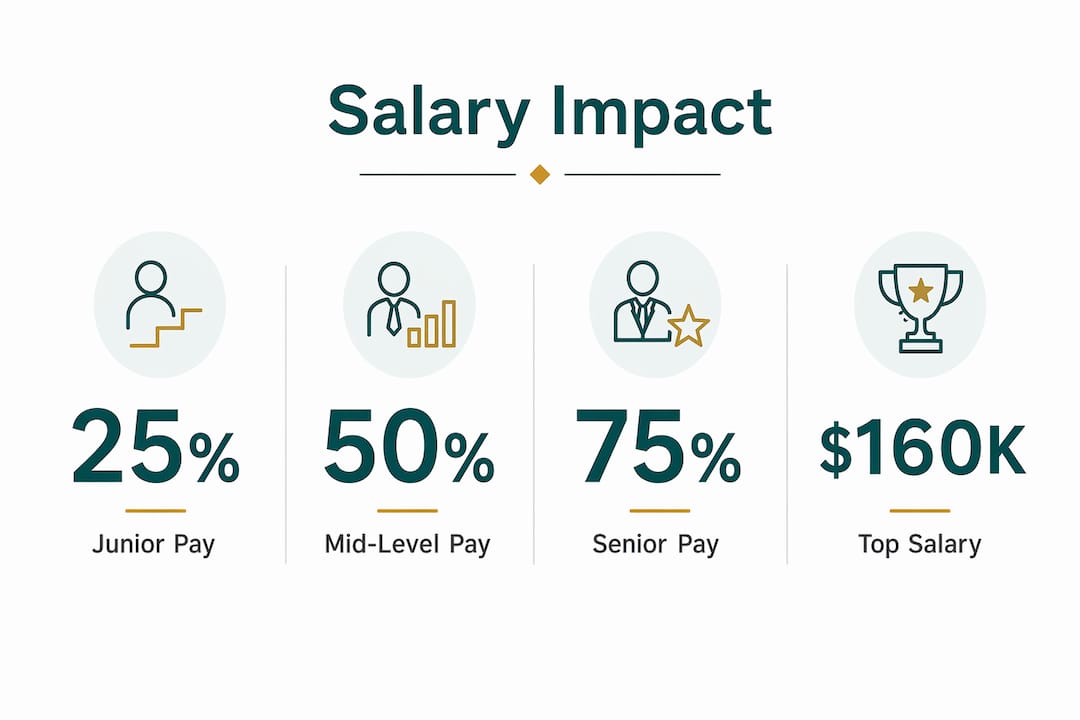
Job titles correlate directly with salary, but the size of that gap varies sharply by industry. Nurse practitioners earn about $37,000 more annually than registered nurses. That single title change represents a career-defining income shift within the same healthcare field.
Geography compounds the job title salary correlation even further. A fundraising manager in Washington earns a median salary of $153,950, compared to $112,340 in Illinois. The title is identical. The pay is not. Location, industry norms, and employer size all modify what a title is actually worth.

The table below shows how salary differences by job title play out across three major sectors.
| Industry | Junior Title | Median Pay | Senior Title | Median Pay |
|---|---|---|---|---|
| Healthcare | Registered Nurse | ~$81,000 | Nurse Practitioner | ~$118,000 |
| Technology | Software Developer | ~$110,000 | Senior Software Engineer | ~$150,000+ |
| Nonprofit | Development Associate | ~$50,000 | Fundraising Manager | ~$112,000–$153,950 |
These figures show that pay scales for different titles are not arbitrary. They reflect the scope of decision-making, the depth of expertise required, and the labor market in each region.
Pro Tip: When benchmarking your pay, always filter by both title and location. A “Manager” title in San Francisco and a “Manager” title in Memphis operate in entirely different pay markets.
Job title vs. pay grade: what actually drives your salary?
The most common misconception professionals carry is that a title change automatically means a pay change. It does not. HR professionals confirm that title changes can result from structural recalibrations or relabeling without any pay impact. The external title is a label. The internal job grade is what drives your paycheck.
Here is how the distinction works in practice:
- Job title is the external label your employer gives you. It appears on your business card, LinkedIn profile, and resume. It signals seniority to the outside world.
- Job grade is the internal classification that places you within a compensation band. It determines your salary floor, ceiling, and progression path.
- Compensation band is the salary range attached to a grade. Two employees with different titles can sit in the same band and earn the same pay.
- Pay steps are incremental increases within a grade, based on time or performance. Moving up a step does not require a title change.
The US Federal General Schedule pay system illustrates this clearly. The GS pay scale spans $22,584 to $164,301 in base pay across grades and steps, with progression from Step 1 to Step 10 within a single grade taking up to 18 years. A federal employee can spend years advancing in pay without ever changing their job title.
The same logic applies in the private sector. A company undergoing a job architecture redesign might rename “Senior Analyst” to “Analyst III” across the board. No one gets a raise. No one gets a cut. The grade stays the same. Only the label changes.
Pro Tip: Before accepting a title change, ask your employer directly: “Is my job grade or compensation band changing?” If the answer is no, the title change has no immediate pay impact.
How do job titles influence recruiting and salary negotiation?
Titles function as an organizational communication system. Consistent title structures improve transparency around advancement and pay fairness. When structures are inconsistent, compensation and promotion pathways become harder to navigate for both employees and managers.
For job seekers, the importance of job title shows up most clearly in two moments: the job application and the offer negotiation.
- Title inflation happens when companies assign senior-sounding titles to roles with limited scope. A “Director” at a 10-person startup may manage no one and earn $70,000. A “Manager” at a Fortune 500 company may lead a team of 20 and earn $130,000. The title alone tells you nothing without context.
- Title deflation is the reverse. Some companies use modest titles to keep salary expectations low during hiring. Recognizing this pattern protects you from undervaluing your experience.
- Negotiating your title is a real lever. Indeed advises professionals to negotiate titles to reflect leadership or technical skills after responsibilities change. A stronger title today affects your perceived market value in your next job search.
- Title clarity on your resume matters for applicant tracking systems. Recruiters search for specific title strings. A vague or nonstandard title can filter you out before a human reads your application.
Recruiters consistently advise professionals to prioritize proving impact and scope rather than chasing prestigious titles for long-term pay and career return. A title that overstates your scope creates expectations you cannot meet. A title that understates it leaves money on the table.
Pro Tip: If your responsibilities have grown significantly since your last title change, document the scope increase with metrics before requesting a title or pay adjustment. Numbers make the case faster than job descriptions.
How to evaluate job titles when comparing offers and planning your career
Comparing two job offers by title alone is a mistake. The title “Senior Manager” at one company can mean something entirely different at another. Your goal is to decode what the title actually represents in terms of scope, authority, and pay.
Here is a practical framework for evaluating job titles in compensation decisions:
- Check the job grade and compensation band. Many employers now disclose salary ranges in job postings. Focus on the compensation range and reporting structure rather than the title string itself. The range tells you more than the label.
- Assess actual responsibilities. Read the job description carefully. How many people does the role manage? What budget authority does it carry? What decisions require sign-off from above? These factors determine real scope.
- Factor in location. As the fundraising manager example shows, the same title in a different city can mean a $40,000 pay difference. Use tools like Fairpayguide’s salary comparison tool to benchmark pay by title and geography before you negotiate.
- Research industry pay norms. A “Principal Engineer” in tech and a “Principal” in education are not comparable. Industry context defines what a title is worth. Fairpayguide’s guide on comparing salaries before applying walks through this process step by step.
- Understand the internal job architecture. Ask whether the company uses a formal leveling system. Companies with clear job architectures offer more predictable pay progression. Companies without them often have inconsistent pay tied to negotiation skill rather than contribution.
- Negotiate the grade, not just the title. In pay-grade environments, starting negotiation at the entry grade or step rather than the title label gives you a concrete anchor. Ask which grade the role is classified at and whether you qualify for a higher entry step based on experience.
The job title impact on salary is real, but it is one variable in a larger equation. Professionals who understand the full equation negotiate better outcomes.
Key Takeaways
Job title affects pay significantly, but internal job grade, compensation band, location, and industry are the true drivers of what you actually earn.
| Point | Details |
|---|---|
| Title signals seniority | Job titles communicate scope and authority to recruiters and employers, shaping salary expectations. |
| Grade drives actual pay | Internal job grades and compensation bands determine your salary floor and ceiling, not the title alone. |
| Location changes the math | The same title can mean a $40,000+ pay difference depending on state or city. |
| Title inflation is common | Senior-sounding titles do not always reflect senior pay; verify scope and grade before accepting. |
| Negotiate grade and scope | Linking your title request to measurable responsibilities produces stronger salary outcomes than title alone. |
The uncomfortable truth about chasing job titles
I have spent years watching professionals make the same mistake. They fixate on getting a title upgrade and assume the pay will follow automatically. It rarely works that way.
The most revealing moment in any compensation conversation is when you ask about the job grade. Most professionals never ask. They accept the title, sign the offer, and discover six months later that they are in the same compensation band as before. Ray Dalio has argued publicly that pay should derive from market benchmarks and actual performance, not the title label. I agree completely.
What I have seen work consistently is this: professionals who document their scope, quantify their impact, and tie both to a specific grade request get better outcomes than those who simply ask for a better title. A title without a grade change is a rebranding exercise. A grade change with a title to match is a real career move.
The other thing worth saying plainly: title changes can reflect internal structure shifts rather than real promotions or demotions. If your company offers you a more junior-sounding title at the same pay, ask whether your grade changed. If it did not, the title change is cosmetic. Do not let a label define how you value your own contribution.
Career growth takes time. Titles fluctuate. Your focus should stay on building measurable capability and communicating your scope clearly to the people who control your pay.
— Obinna
Salary data that puts your title in context
Understanding how job title affects pay is only useful if you have real numbers to work with.
Fairpayguide gives you the salary data you need to negotiate with confidence. Use the salary lookup tool to find compensation ranges by job title and location across industries. If you want to contribute to more accurate market data, you can submit your salary anonymously in minutes. Every submission helps build a clearer picture of what titles actually pay across companies and geographies. The more data professionals share, the more accurate the benchmarks become for everyone.
FAQ
Does a job title change always mean a pay raise?
No. Title changes often result from internal restructuring or relabeling without any change to job grade or compensation band. Always confirm whether your grade or scope changed before assuming a pay impact.
What is the difference between a job title and a job grade?
A job title is the external label attached to your role. A job grade is the internal classification that determines your compensation band, salary floor, and ceiling. The grade drives your pay; the title communicates your level to the outside world.
How much can location affect pay for the same job title?
Location creates significant pay differences even for identical titles. A fundraising manager earns a median of $153,950 in Washington versus $112,340 in Illinois, a gap of over $40,000 for the same role.
Can you negotiate a job title without negotiating pay?
Yes, and sometimes that is the right move. Negotiating a title to reflect leadership or technical skills improves your market positioning for future roles, even if it does not immediately change your current salary.
What should I look at beyond the title when evaluating a job offer?
Focus on the compensation range, job grade, reporting structure, and actual responsibilities. The job posting requirements and pay transparency give you a more accurate read on true job level than the title string alone.
Recommended
- Why Job Offers Vary in Pay: Key Factors Explained | FairPayGuide Blog
- Compare Salaries Before Applying: A 2026 Job Seeker’s Guide | FairPayGuide Blog
- Understanding Salary Structures Across Different Countries | FairPayGuide Blog
- Maximize Your Earnings with a Salary Comparison Tool | FairPayGuide Blog