Doctor Salary by Geographic Location: 2026 Guide

Doctor salary by geographic location is the single most important variable in physician compensation, with regional averages ranging from $385,000 in the Midwest to well above $470,000 in select metro markets. The gap is not random. Physician shortages, state income tax rates, cost of living, and specialty mix all drive the spread. Understanding how these forces interact is what separates a good career move from a great one. This guide breaks down where doctors earn the most, which states offer the best real take-home pay, and how you can use geographic data to negotiate a stronger contract.
1. Which U.S. regions pay doctors the most and why?
The Plains region leads all U.S. regions with an average physician salary of $476,500, compared to $423,000 in New England. That $53,500 gap reflects a fundamental supply-demand imbalance. Fewer doctors compete for the same hospital budgets in rural and Plains states, so employers bid higher to fill positions.

Rural hospitals face the sharpest shortages. To attract talent, they offer signing bonuses and loan repayment packages that urban health systems rarely match. A physician in rural Wyoming or South Dakota may receive a base salary plus $50,000 in loan repayment, a signing bonus, and relocation assistance.
Specialty mix also skews regional averages. States with a higher concentration of surgical specialties, such as orthopedics and neurosurgery, report higher average salaries than states dominated by primary care. When you compare regions, check whether the average reflects your specialty or a broader mix.
- Plains states: Average $476,500. Driven by physician shortages and hospital competition.
- Southeast: Strong surgical presence and growing population push averages above $440,000 in many markets.
- New England: Average $423,000. High concentration of academic medical centers compresses private practice pay.
- Pacific Coast: High nominal salaries in metros like Los Angeles, but real purchasing power erodes quickly after taxes and housing.
Pro Tip: When evaluating a regional offer, ask the recruiter for the specialty-specific average, not the all-physician average. A primary care offer in a surgical-heavy region will look artificially low against the regional benchmark.
2. Top U.S. states for doctor salaries adjusted for cost of living and taxes
Nominal salary is often misleading. A cost-of-living and tax-adjusted analysis is the only reliable way to compare physician pay across states. California’s top marginal income tax rate reaches 13.3%, which alone can cost a physician earning $400,000 more than $50,000 annually compared to a peer in a no-income-tax state.
States with no income tax, including Wyoming, Florida, and Texas, deliver meaningfully higher real compensation even when their nominal salaries trail California or New York. A physician earning $380,000 in Texas keeps more after-tax income than one earning $420,000 in New Jersey or New York, where high taxes reduce real pay substantially.
| State | Median Physician Salary | State Income Tax | Cost of Living Index |
|---|---|---|---|
| Wyoming | $430,000+ | None | Low |
| Texas | $400,000+ | None | Below average |
| Florida | $395,000+ | None | Moderate |
| South Dakota | $420,000+ | None | Low |
| New York | $430,000+ | Up to 10.9% | Very high |
| California | $450,000+ | Up to 13.3% | Very high |
| New Jersey | $420,000+ | Up to 10.75% | High |
| Tennessee | $390,000+ | None | Below average |
| Washington | $415,000+ | None | High |
| Minnesota | $410,000+ | Up to 9.85% | Moderate |
Pro Tip: Use a salary comparison tool like Fairpayguide’s salary lookup to filter physician pay by state and specialty. Pair that data with a state tax calculator to estimate your actual take-home before accepting any offer.
3. How metropolitan areas compare in doctor pay: nominal vs. real purchasing power
Metro areas produce some of the highest nominal physician salaries in the country. Los Angeles reports average physician earnings near $470,000, while Nashville and Honolulu each average around $415,000. Those headline numbers attract attention, but they do not tell the full story.
Cost-of-living-adjusted rankings place Rochester, MN near the top of all U.S. metros for real physician purchasing power, with nominal salaries around $495,000 and a cost of living well below coastal cities. Boston and Washington, DC, despite strong nominal pay, rank near the bottom after adjusting for housing, taxes, and daily expenses.
Urban lifestyle premiums in cities like San Jose, Boston, and New York consistently reduce real purchasing power even when nominal salaries look competitive. A physician earning $460,000 in San Jose faces median home prices above $1.5 million and California’s 13.3% top tax rate. The same physician earning $400,000 in Rochester or Omaha builds wealth faster.
- Rochester, MN: High nominal salary, low cost of living. Top real purchasing power nationally.
- Nashville, TN: $415,000 average, no state income tax, moderate cost of living. Strong real value.
- Los Angeles, CA: $470,000 nominal, but California taxes and housing costs compress real earnings sharply.
- Boston, MA: High nominal pay, but high cost of living and state taxes push it toward the bottom of adjusted rankings.
- Omaha, NE: Below-average cost of living with competitive salaries. Underrated market for wealth building.
4. Key factors influencing doctor salary differences by location
Geographic pay gaps do not exist in isolation. Several structural factors drive the variation you see between states, metros, and rural markets.
- Gender pay gap. Male physicians earn $102,000 more than female physicians on average, a 31% gap that widened from 29% two years prior. This disparity compounds across locations and specialties, making negotiation skills especially critical for women physicians.
- RVU-based compensation. Relative Value Units influence base pay in approximately 35% of physician contracts. Locations with high patient volume reward productivity-linked pay structures, while lower-volume rural markets may rely more on straight salary.
- Physician supply per capita. Rural and underserved areas have fewer physicians per capita. Hospitals in those markets pay higher base salaries and incentives to attract talent that urban markets can recruit through lifestyle advantages alone.
- Specialty concentration. Surgical-heavy markets skew regional averages upward. Primary care physicians in those same markets may earn significantly less than the regional average suggests.
- Hospital competition. Markets with multiple competing health systems bid against each other for physicians. Single-system markets, especially in rural areas, may offer less flexibility but more stability.
5. How doctors can use geographic arbitrage and contract negotiation to maximize earnings
Geographic arbitrage is the practice of working in high-pay, low-cost rural communities to build wealth faster than you could in an expensive city. A physician earning $430,000 in rural South Dakota with minimal state taxes and a low cost of living can save and invest at a rate that a $470,000 earner in San Francisco cannot match.
The strategy works best when you combine location choice with strong contract negotiation. The AMA recommends negotiating total compensation, not just base salary. Signing bonuses, loan repayment, call requirements, and productivity bonuses can add $50,000 to $100,000 in annual value beyond the base figure.
- Prioritize total compensation. A $380,000 base with $40,000 in loan repayment and a $30,000 signing bonus beats a $420,000 base with no extras in a high-tax state.
- Understand your RVU threshold. If your contract includes RVU-based pay, know the benchmark and what happens when you exceed it. High-volume practices in rural markets often reward productivity generously.
- Use professional contract review. A physician contract attorney or contract review service identifies clauses that limit your earning potential, including non-compete agreements and restrictive call schedules.
- Benchmark before you negotiate. Tools like Fairpayguide’s salary comparison give you location-specific and specialty-specific data to anchor your negotiation.
Pro Tip: Before signing any offer, calculate your after-tax, after-housing income. A $50,000 nominal salary difference can disappear entirely once you account for state taxes and cost of living. Use salary data for career planning to run those numbers before you negotiate.
Key takeaways
Doctor salary by geographic location is determined by a combination of regional physician supply, state tax policy, cost of living, and specialty mix. Midwest and rural states consistently offer the highest real physician compensation when all factors are weighed together.
| Point | Details |
|---|---|
| Plains states lead all regions | Average physician salary in the Plains region reaches $476,500, driven by physician shortages. |
| No-tax states maximize take-home pay | Wyoming, Texas, and Florida deliver higher real income than high-tax states with larger nominal salaries. |
| Urban nominal salaries mislead | Cities like Boston and San Jose rank near the bottom for real purchasing power after taxes and housing. |
| RVUs affect 35% of contracts | Productivity-linked pay structures can significantly raise or lower actual earnings beyond base salary. |
| Geographic arbitrage builds wealth faster | Rural high-pay, low-cost placements accelerate savings and debt repayment more than high-cost city roles. |
Why the headline salary number is the wrong place to start
Most physicians I talk to anchor their career decisions to the nominal salary figure in the offer letter. That is the wrong starting point. I have seen physicians take $450,000 roles in California and end up with less disposable income than colleagues earning $390,000 in Tennessee. The math is not complicated once you run it, but most people never do.
The gender pay gap data is particularly striking. A $102,000 average gap between male and female physicians is not a rounding error. It is a structural problem that compounds over a career. Female physicians negotiating their first contract in a new location are starting from a lower baseline than their male peers, which makes location choice and negotiation skill even more consequential for them.
Regional physician shortages are not going away. Rural and underserved markets will continue to offer premium compensation packages to attract talent. That trend makes geographic arbitrage a more powerful tool in 2026 than it was five years ago. The physicians who treat location as a financial variable, not just a lifestyle preference, will reach financial independence years ahead of those who do not.
My strongest advice: get a contract review before you sign anything. The base salary is negotiable. The RVU threshold is negotiable. The loan repayment terms are negotiable. Most physicians leave significant money on the table simply because they did not know what to ask for.
— Obinna
Salary transparency tools for physicians comparing pay by location
Knowing the regional benchmarks is only useful if you have current, specialty-specific data to back up your negotiation. Fairpayguide brings that transparency to physician compensation with tools built for exactly this kind of decision.
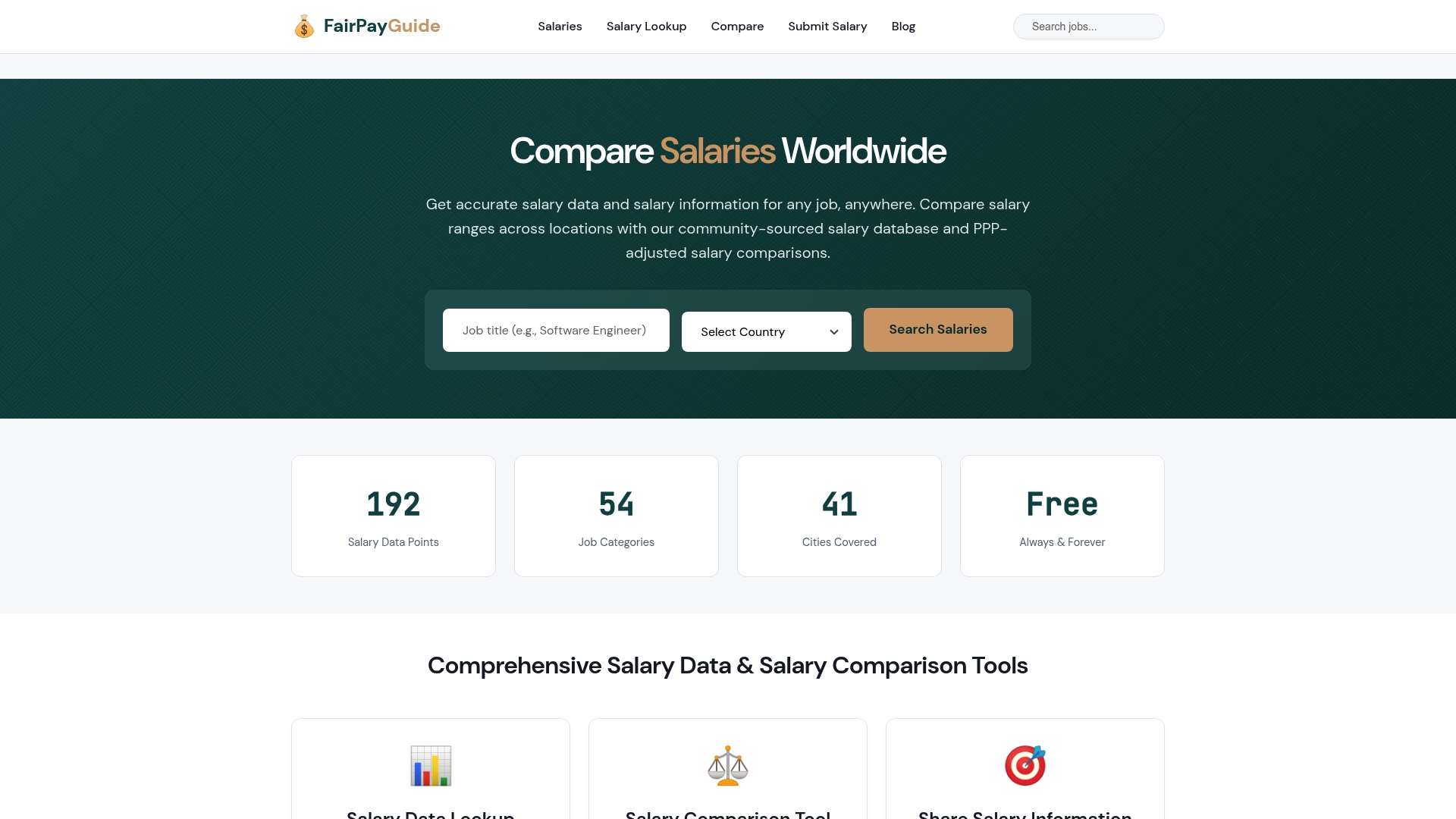
You can look up physician salaries by location and specialty to see where your offer stands against real market data. If you want to contribute to the benchmark, submit your salary anonymously and help build a more accurate picture for every physician who comes after you. The more doctors share their compensation data, the stronger the negotiating position for everyone in the profession.
FAQ
What state pays doctors the highest average salary?
Plains and Midwest states consistently report the highest average physician salaries, with the Plains region averaging $476,500. No-income-tax states like Wyoming and South Dakota also rank near the top for real take-home pay.
How much does location affect a doctor’s salary?
Location can shift average physician compensation by $50,000 or more annually. Regional physician shortages, state income tax rates, and cost of living all affect both nominal and real earnings.
Do urban doctors earn more than rural doctors?
Urban doctors often earn higher nominal salaries, but rural physicians frequently earn more in real terms after adjusting for cost of living and taxes, plus rural roles often include signing bonuses and loan repayment.
What is geographic arbitrage for physicians?
Geographic arbitrage means choosing a high-pay, low-cost location, typically rural, to maximize savings and accelerate debt repayment. It is one of the most effective tools for building physician wealth faster than chasing high nominal salaries in expensive cities.
How do RVUs affect physician pay by location?
RVUs, or Relative Value Units, link pay to patient volume and procedure complexity. Approximately 35% of physician contracts include RVU-based pay, and high-volume rural markets can make these structures especially lucrative.