Why Job Offers Vary in Pay: Key Factors Explained

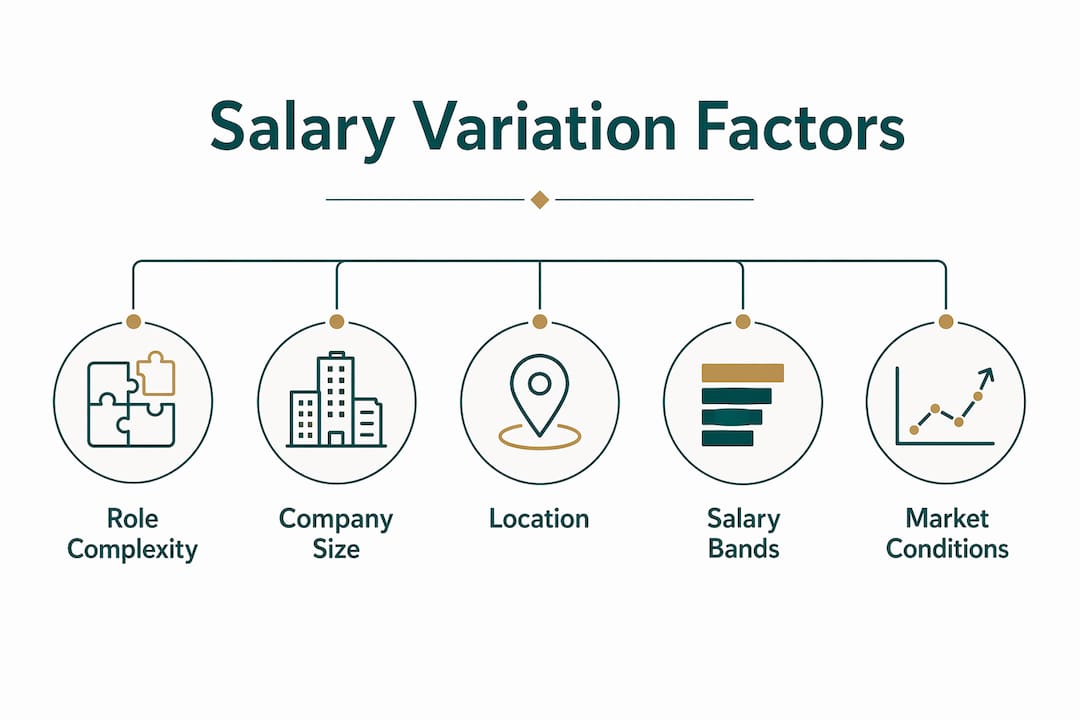
Job offers vary in pay because employers weigh a combination of role complexity, company revenue, geographic location, and compensation structure before making any offer. Two candidates with identical resumes can receive offers $40,000 apart for the same job title at different companies. Understanding the factors affecting salary offers puts you in a stronger position to evaluate what you’re worth and negotiate with confidence. Fairpayguide exists to make that process clearer, and this article breaks down exactly what drives those salary differences.
Why job offers vary in pay: role complexity and responsibilities
The most direct reason salaries differ is the actual work being done. Even when two jobs share the same title, the scope of responsibilities can be dramatically different. A “software engineer” at a 10-person startup managing the entire backend stack carries far more risk and complexity than a “software engineer” at a large corporation maintaining one module of a legacy system.
Economists call this concept compensating wage differentials. Jobs involving unpleasant conditions or physical risk pay more to attract workers when labor supply is not perfectly elastic. This explains why a night-shift warehouse supervisor earns more than a day-shift peer doing similar work, and why an offshore oil rig technician earns multiples of what an onshore counterpart makes.
Here is how role complexity shows up in pay differences:
- Decision-making authority: Roles that require final budget or hiring decisions command higher pay than advisory roles.
- Revenue accountability: A sales manager responsible for a $5M quota earns more than one managing a $500K territory.
- Technical depth: Specialized skills in areas like machine learning or derivatives trading carry scarcity premiums.
- Physical or legal risk: Roles with personal liability, safety exposure, or regulatory accountability attract pay premiums.
Pro Tip: Before your next negotiation, write out every responsibility you own that is not in the job description. Quantify the revenue, headcount, or budget you influence. That list is your complexity argument.
Does company size affect how much a job pays?
Company size and financial capacity are among the strongest predictors of pay. The mechanism is straightforward: companies with higher revenue per employee can afford to pay more, and they do.

Big Tech companies pay 4–5 times more in total compensation compared to average employers. The reason is structural. Big Tech revenue per employee reaches approximately $1.5 million, which gives these firms the financial room to pay top talent aggressively. A software engineer at Google or Meta is not just paid for their code. They are paid because the company’s economics make that investment rational.
Contrast that with retail or hospitality, where revenue per employee is often below $100,000. Those industries operate on thin margins, which caps what they can offer regardless of how much they want to attract talent.
| Industry | Avg. Revenue per Employee | Typical Total Comp (Mid-Level Role) |
|---|---|---|
| Big Tech (Google, Meta, Apple) | ~$1.5M | $250,000–$400,000 |
| Finance / Investment Banking | ~$500K–$800K | $150,000–$300,000 |
| Healthcare / Pharma | ~$200K–$350K | $90,000–$160,000 |
| Manufacturing | ~$150K–$250K | $70,000–$120,000 |
| Retail / Hospitality | ~$50K–$100K | $35,000–$65,000 |
Company growth stage also matters. A Series B startup flush with venture capital may offer below-market base salaries but compensate with equity. A mature public company with stable cash flow will anchor on base pay and bonuses. Neither is wrong. They reflect different financial realities and risk profiles.
How does location affect salary offers?
Geography is one of the most misunderstood factors in pay variation. The same job title can pay $95,000 in Austin and $145,000 in San Francisco, not because the work is different, but because employers price roles against local market rates.
Remote roles often pay according to the employee’s local market rather than company headquarters. Most large employers use location-based pay bands, which means two people doing identical remote work for the same company can earn significantly different amounts based solely on their zip code. This practice is called geo-banding, and it is now standard at companies like Salesforce, GitLab, and Stripe.
Key location factors that shape salary offers include:
- Cost of living index: Employers in high-cost metros like New York or Seattle set higher base salaries to maintain purchasing power parity.
- Local talent supply: Cities with dense tech talent pools, like San Francisco or Austin, see competitive bidding that raises market rates.
- State tax environment: Some employers adjust gross pay in high-tax states to help employees maintain net income targets.
- Remote work policy: Companies with “pay by location” policies will offer less to candidates in lower-cost regions, even for fully remote roles.
Pro Tip: If you are negotiating a remote role, research the company’s headquarters market rate using tools like the Fairpayguide salary comparison tool. Then build a case for why your skills justify the higher band, especially if your role requires collaboration with teams in high-cost markets.
What are salary bands and how do they limit pay?
Salary bands are the internal pay ranges companies set for each role level. They are built using external market data from compensation surveys, then adjusted for internal equity. Employers rely on salary surveys to anchor market pay, balancing fairness and financial constraints. The result is a structured range with a minimum, midpoint, and maximum.
The problem is that wide ranges can obscure where most offers actually land. Wide salary ranges in job postings often serve as a strategic concealment. The upper end attracts applicants. The lower end is where most offers are made. This information gap favors the employer in early conversations.
Beyond base salary, total compensation adds significant complexity to pay comparisons. Consider two offers side by side:
| Component | Offer A (Startup) | Offer B (Public Company) |
|---|---|---|
| Base Salary | $110,000 | $130,000 |
| Annual Bonus | $5,000 (discretionary) | $20,000 (target) |
| Equity | $80,000 (4-year vest, illiquid) | $40,000 (RSUs, liquid) |
| Health Benefits | Basic | Premium (family coverage) |
| Total Comp (Year 1) | ~$115,000 cash | ~$150,000 cash |
Total compensation packages often include bonuses and equity that are backloaded or illiquid, making headline salary figures misleading. The practical move is to create what compensation analysts call a “certainty bucket.” Separate guaranteed cash from variable or illiquid components before comparing offers. That one step changes how most offers look on paper.
You can use the Fairpayguide salary lookup tool to benchmark base salary ranges by role and location before you evaluate any total comp package.
How do market conditions shape negotiation flexibility?
Market demand and internal policy together set the ceiling on what you can negotiate. Roles with scarce talent availability command premium pay relative to roles that are easy to fill. A prompt engineer or AI safety researcher in 2026 has far more leverage than a generalist project manager, simply because supply has not caught up with demand.
At the same time, hiring managers frequently have limited discretion to exceed pay bands due to internal policies and budgets. Offers in 2026 are shaped more by organizational policy than individual merit. That means pushing hard on base salary alone may hit a wall quickly.
When base salary flexibility is limited, shift your negotiation to these areas:
- Signing bonus: Often funded from a separate budget and easier to approve than a base increase.
- Remote work flexibility: Saving commute costs has real dollar value, especially in high-cost cities.
- Title upgrade: A higher title today means a higher starting point at your next job.
- Accelerated review: Negotiate a 6-month performance review instead of the standard 12-month cycle.
- Benefits and perks: Additional PTO, professional development budgets, or equity acceleration clauses add measurable value.
Pro Tip: Before any negotiation, assess your actual leverage. If the role has been open for more than 60 days or requires a niche skill set, you have more room than you think. If it is a high-volume role with a deep applicant pool, focus on non-salary terms where the company has more flexibility.
HR technology platforms like Evy help companies manage compliant hiring workflows, which often means pay bands are enforced more strictly than candidates expect. Knowing this going in helps you redirect energy toward the terms that actually have room to move.
Key takeaways
Job offers vary in pay because role complexity, company economics, location, compensation structure, and market conditions each pull the final number in different directions.
| Point | Details |
|---|---|
| Role complexity drives premiums | Quantify your decision-making authority and revenue impact before negotiating. |
| Company economics set the ceiling | High-margin industries like Big Tech can pay 4–5x more than low-margin sectors. |
| Location shapes every offer | Geo-banding means remote workers in lower-cost regions often earn less for identical work. |
| Salary bands limit base pay flexibility | Wide posted ranges often conceal that most offers land near the lower end. |
| Total comp beats headline salary | Separate guaranteed cash from illiquid equity to make accurate offer comparisons. |
What i’ve learned about pay variation after years of watching negotiations
Most job seekers walk into salary conversations focused on one number: base pay. That instinct is understandable, but it misses how compensation actually works. After watching hundreds of offer negotiations play out, the candidates who come out ahead are the ones who understand the full picture before the conversation starts.
The biggest mistake I see is treating a salary range as a target rather than a system. Companies build bands to protect internal equity and manage financial risk. When a hiring manager says “that’s the top of our band,” they usually mean it. Pushing past that ceiling rarely works. Redirecting to signing bonuses, title, or review timelines almost always does.
The second mistake is ignoring location data. If you are negotiating a remote role, you need to know what the company pays in its headquarters market. That number is your anchor. Tools like Fairpayguide let you compare salaries worldwide so you walk in with real data, not assumptions.
My honest advice: treat every offer as a package, not a paycheck. Build your certainty bucket. Know your leverage. And do not accept the first number without at least one data-backed counter. The research is available. Use it.
— Obinna
Use Fairpayguide to decode any salary offer
Understanding why salaries differ is only half the work. The other half is knowing your specific market value before you sit down to negotiate.
Fairpayguide gives you the salary data you need to negotiate from a position of knowledge. Search salary ranges by role and location to benchmark any offer against real market data. You can also submit your salary anonymously to help build the transparent, accurate compensation data that every job seeker deserves. The more professionals contribute, the more accurate the benchmarks become for everyone. Start with your own number and see exactly where you stand.
FAQ
Why do two identical job titles pay differently?
Job titles do not define pay. Role complexity, company revenue, location, and internal pay bands all determine the actual offer. Two “marketing managers” at different companies can have entirely different scopes of responsibility and budget authority.
What is a compensating wage differential?
A compensating wage differential is the extra pay employers offer to attract workers to roles with unpleasant conditions, physical risk, or unsocial hours. It reflects the premium required when labor supply for difficult roles is limited.
How do salary bands affect what i can negotiate?
Salary bands set a fixed range for each role level. Hiring managers typically cannot offer above the band maximum, which limits base salary negotiation. Focusing on signing bonuses, title, or benefits often yields better results when the band ceiling is reached.
Does remote work mean lower pay?
Not always, but often. Most large employers use geo-banding, which ties pay to the employee’s local market rather than headquarters. A remote worker in a lower-cost city may receive a lower offer than a colleague in a high-cost metro for the same role.
What is the best way to compare two job offers?
Separate guaranteed cash from variable or illiquid components like unvested equity or discretionary bonuses. Compare base salary, target bonus, liquid equity, and benefits independently. That breakdown gives you a clear picture of what each offer is actually worth in year one.