Research Company Salary Range: Your 2026 Career Guide

Researching a company’s salary range means gathering verified compensation data for specific roles across industries, and doing it right separates confident negotiators from underpaid professionals. Platforms like ZipRecruiter, Glassdoor, and Orbyt Jobs publish current salary figures that give you a real baseline before any offer conversation. The research company salary range for general lab scientists sits at a national median of $70,000 as of 2026, while specialized roles like NLP Research Scientists average $195,000. That gap tells you everything about why role specificity matters when you research pay. This guide walks you through the tools, factors, and methods that produce accurate, usable salary data.
What sources give you the best research company salary range data?
The most reliable salary data comes from platforms that update frequently and segment by role, location, and experience level. ZipRecruiter, Glassdoor, Payscale, and Orbyt Jobs each serve a different slice of this need. Orbyt Jobs, for example, publishes role-specific pages covering over 81 cities, making it useful for geographic comparisons. The Bureau of Labor Statistics (BLS) provides government-validated figures that hold up in formal negotiations.
Understanding how these platforms report data matters as much as finding the numbers. Most publish a median salary alongside 25th and 75th percentile figures. The 25th to 75th percentile range for general researchers on ZipRecruiter runs from $31,500 to $65,000, with top earners reaching $86,000. That spread shows you where the market clusters and where outliers live.

| Platform | Coverage | Update Frequency | Role Specificity |
|---|---|---|---|
| Orbyt Jobs | 81+ U.S. cities | Monthly | High (role-level pages) |
| ZipRecruiter | National U.S. | Ongoing | Moderate |
| Glassdoor | Global | Ongoing | Moderate |
| Payscale | National U.S. | Quarterly | High |
| BLS | National U.S. | Annual | Low to moderate |
Fairpayguide’s salary lookup tool adds another layer by letting you search specific job titles and compare compensation across regions in one place. Cross-referencing at least three platforms before drawing conclusions gives you a defensible number.
Pro Tip: Never rely on a single salary source. Pull figures from at least three platforms and note where the ranges overlap. The overlap zone is your most reliable market rate.
How do role, location, industry, and company size shift your pay scale?
Job title and seniority level produce the largest salary gaps in research careers. A research associate at a mid-size biotech firm earns far less than a senior research engineer at a frontier AI lab. NLP Research Scientist salaries jumped 15–30% since 2024 due to surging demand, with the national average now at $195,000 and staff-level scientists earning $260,000 to $350,000. That kind of premium reflects market scarcity, not just seniority.
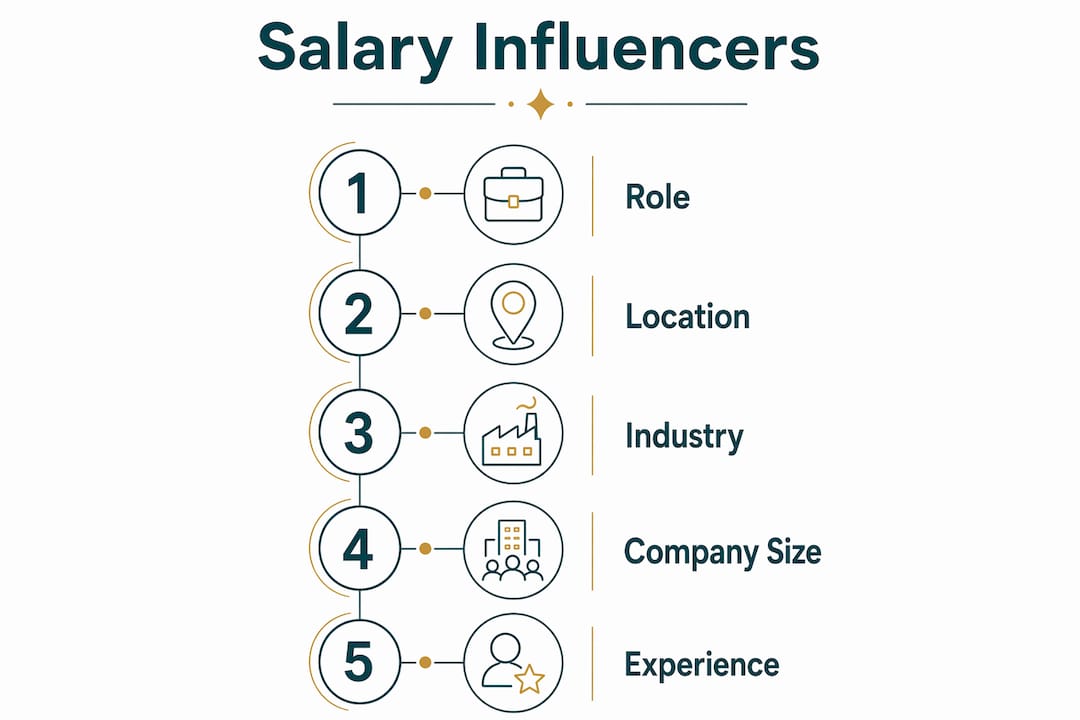
Location adjusts your baseline in ways that surprise many job seekers. San Francisco and New York command higher pay, but cost-of-living adjustments often shrink the real-dollar advantage. Remote roles earn roughly 3% less than on-site positions due to location-adjusted pay policies. Applied scientists working remotely see an even steeper gap, earning around 10% less than onsite peers at the same company.
Company tier and industry sector create the most dramatic differences of all. Tier 1 frontier research labs pay a 126% premium over standard market rates. Senior roles at these labs carry base salaries of $400,000 to $700,000, with total compensation reaching $2,000,000 to $5,000,000 at the principal level. General industry roles sit nowhere near those figures.
Key factors that shape your research job pay scale:
- Job title and seniority: Research associate, research scientist, and principal researcher represent entirely different pay bands.
- Location: Major tech hubs pay more in base salary but remote roles face geographic adjustments.
- Industry sector: AI and biotech pay premiums compared to government or nonprofit research.
- Company tier: Frontier labs pay multiples of what standard employers offer for comparable titles.
- Remote vs. onsite status: On-site roles consistently pay more due to location-based compensation policies.
- Specialized skills: Publication records at venues like NeurIPS or ICML add a 15–25% salary premium for machine learning researchers.
How do you analyze and compare research salary data step by step?
A structured process turns raw salary numbers into a clear picture of what you should earn. Follow these six steps to build a salary comparison you can actually use in a negotiation.
-
Collect data from multiple sources. Pull salary figures for your exact job title and target location from at least three platforms: Orbyt Jobs, ZipRecruiter, and Glassdoor are a strong starting set. Record the median, 25th percentile, and 75th percentile for each source.
-
Identify your percentile position. Your years of experience and skill level place you somewhere in that range. Entry level research salary typically falls near the 25th percentile. Mid-career professionals with three to seven years of experience generally land near the median.
-
Adjust for company size and industry. A $120,000 median for a research analyst at a Fortune 500 tech firm does not translate directly to a startup or a government agency. Use industry-specific data when available. Orbyt Jobs role pages segment by city, which helps here.
-
Account for total compensation. Base salary is only part of the picture. Equity and bonuses comprise 20–40% of total compensation for research professionals. Sign-on bonuses and equity grants cause over $100,000 variance in total pay for similar offers. Two identical base salaries can represent very different actual earnings.
-
Build a comparison table. Organize your findings in a simple spreadsheet with columns for source, job title, location, median salary, 25th percentile, 75th percentile, and total compensation notes. A side-by-side view reveals outliers and confirms where the market clusters.
| Source | Title | Location | Median | 75th Percentile |
|---|---|---|---|---|
| Orbyt Jobs | Lab Scientist | National | $70,000 | $92,000 |
| ZipRecruiter | Researcher | National | ~$48,000 | $65,000 |
| Orbyt Jobs | Applied Scientist | National | ~$182,000 | $228,000 |
| Orbyt Jobs | NLP Research Scientist | National | $195,000 | $258,000 |
- Set your target range. Use the overlap between your sources to define a realistic salary expectation. Add 10–15% to account for negotiation room. Your final number should reflect your experience, location, and the total compensation package on the table.
Pro Tip: If you have first-author publications at top AI conferences like NeurIPS or ICML, factor that into your target range. A strong publication record commands a measurable premium that most salary databases do not automatically capture.
What mistakes should you avoid when researching salary ranges?
Single-source research is the most common error job seekers make. One platform’s figures can reflect outdated data, a narrow sample, or a specific industry segment that does not match your target employer. Cross-checking three or more sources catches these gaps before they cost you money.
Ignoring role-specific nuances leads to misplaced expectations. A “research analyst” at a market research firm and a “research analyst” at a hedge fund share a title but not a pay scale. Always filter by industry and company type, not just job title. The salary trends in research companies vary sharply by sector, and treating all research roles as equivalent produces inaccurate benchmarks.
Overlooking geographic cost-of-living adjustments skews your comparison. A $150,000 salary in San Francisco and a $150,000 salary in Austin represent different purchasing power. Use city-level data when it is available, and check whether a remote role carries a location adjustment clause.
When your data sources conflict, take these steps:
- Check the publication date of each source. Older data may not reflect recent market shifts like the AI-driven pay surge.
- Confirm the sample size. Platforms with fewer than 100 data points for a specific role produce less reliable medians.
- Look at total compensation, not just base. Offers that look similar on base salary can differ by $100,000 or more once equity and bonuses are included.
- Consult industry forums, LinkedIn salary insights, and professional networks for qualitative confirmation.
- Review the reasons job offers vary in pay to understand structural causes behind the discrepancies you find.
Recognizing that two offers with the same base salary can differ dramatically in total value is the single most important mindset shift for research professionals entering negotiations.
Key Takeaways
Accurate salary research requires multiple data sources, role-specific context, and a clear understanding of total compensation beyond base salary.
| Point | Details |
|---|---|
| Use multiple platforms | Cross-check Orbyt Jobs, ZipRecruiter, and Glassdoor to find where salary ranges overlap. |
| Role and location drive the biggest gaps | NLP Research Scientists average $195,000 nationally, while general researchers median at $70,000. |
| Company tier creates extreme premiums | Frontier AI labs pay a 126% premium over market rates, with senior total comp reaching $5,000,000. |
| Total compensation matters more than base | Equity and bonuses can add 20–40% to total pay, and sign-on bonuses cause $100,000+ variance. |
| Publication record boosts researcher pay | First-author papers at NeurIPS or ICML add a 15–25% salary premium for machine learning researchers. |
What I have learned from years of tracking research salaries
The biggest mistake I see professionals make is treating salary research as a one-time task. Markets shift fast, especially in AI and data science. The NLP salary surge of 15–30% since 2024 caught a lot of researchers off guard because they had not updated their benchmarks in two years. Continuous monitoring is not optional if you want to negotiate from a position of strength.
Quantitative data only gets you so far. The number on a salary page does not tell you whether a company has a culture of annual raises, whether equity vests on a reasonable schedule, or whether the role has a clear path to promotion. I always recommend pairing your salary research with conversations in professional communities, LinkedIn groups, and industry events. Those qualitative signals fill in what the databases leave out.
The AI-driven pay surge is also creating a two-tier market that many job seekers have not fully processed. Frontier lab salaries and general industry salaries are diverging, not converging. If you are targeting a top-tier AI research role, your benchmark should come from tier-specific data, not broad national averages. Using the wrong benchmark in a negotiation leaves real money on the table. Staying current on AI-driven salary trends is now a core career skill, not a nice-to-have.
— Obinna
Start your salary research with Fairpayguide
Fairpayguide gives you the tools to move from guesswork to grounded salary expectations. Use the salary lookup tool to search compensation data for specific research roles across locations and experience levels. The results pull from current market data so your benchmarks stay relevant.
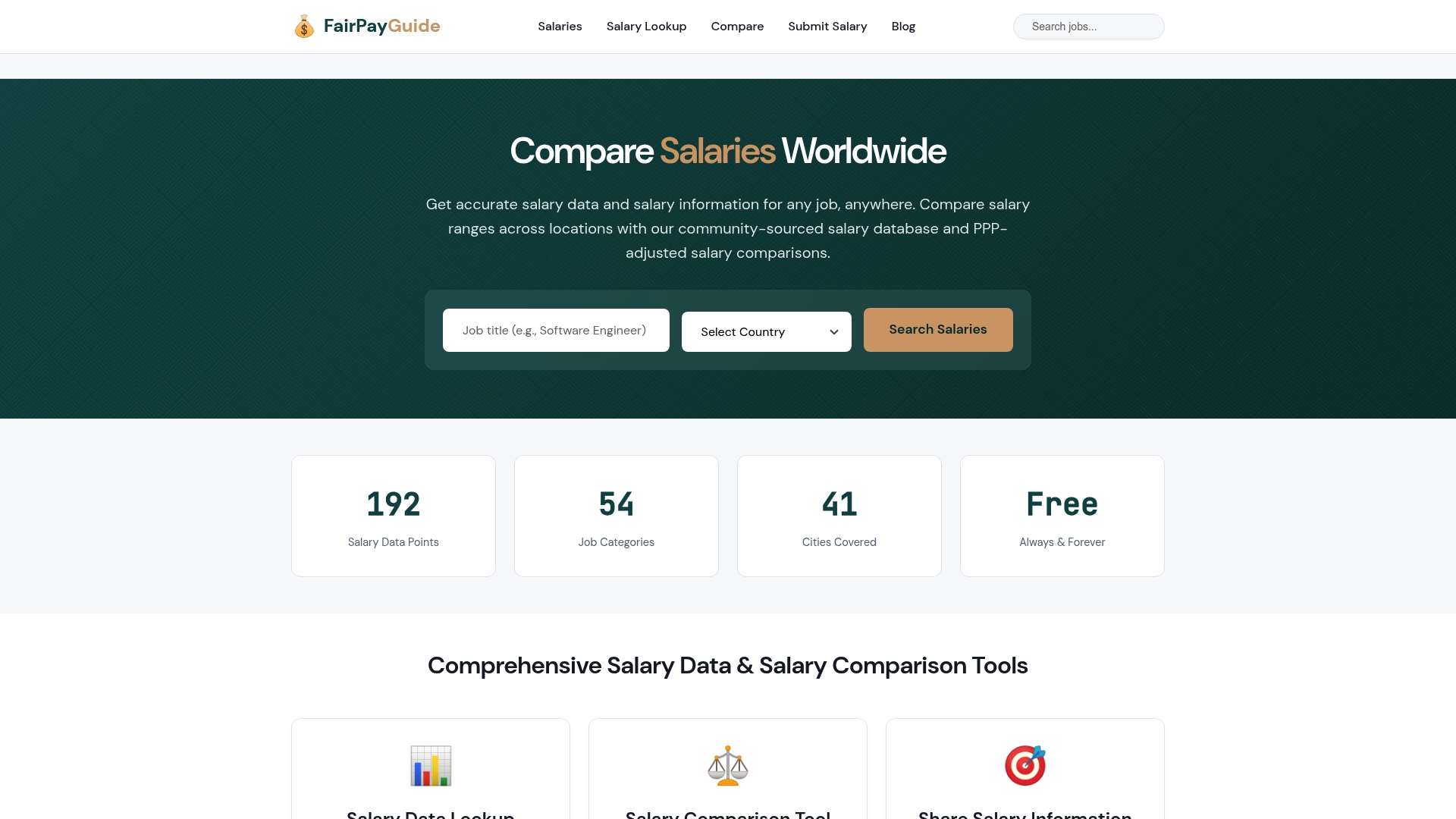
You can also submit your salary anonymously to strengthen the community database that powers these comparisons. Every submission improves the accuracy of the data for researchers at every career stage. If you want to benchmark your compensation across regions or compare multiple roles side by side, the salary comparison tool at Fairpayguide handles that in minutes.
FAQ
What is the average salary for researchers in the U.S. in 2026?
General researchers earn a national median of $70,000, with the 25th percentile at $52,000 and the 75th percentile at $92,000. Specialized roles like NLP Research Scientists average $195,000 nationally.
How do I find a company’s salary range for a research role?
Use platforms like Orbyt Jobs, ZipRecruiter, and Glassdoor to pull median and percentile salary figures for your specific title and location. Cross-referencing at least three sources gives you the most accurate picture.
Does remote work affect research job pay?
Remote research roles earn roughly 3–10% less than on-site positions due to geographic pay adjustment policies. Applied scientists working remotely see closer to a 10% reduction compared to their on-site counterparts.
What counts as total compensation for research professionals?
Total compensation includes base salary, bonuses, equity grants, and benefits like conference travel budgets. Equity and bonuses alone can represent 20–40% of total pay for research professionals.
Why do two similar research offers differ so much in pay?
Equity structures and sign-on bonuses cause over $100,000 in variance between offers with identical base salaries. Company tier, industry sector, and geographic location all add further variation on top of that.