Why Data Engineering Pay Outpaces Analysts in 2026

Data engineering is defined as the discipline of building, maintaining, and scaling the infrastructure that makes data usable across an organization. That responsibility is exactly why data engineering pay outpaces analysts by a significant margin. According to Indeed, the average advertised data engineer salary sits at $136,892, while data analyst roles typically start far lower. The Bureau of Labor Statistics projects 34% employment growth for data science and engineering roles through 2034. That growth rate, combined with a limited talent supply, keeps compensation climbing.
Why data engineering pay outpaces analysts: the core drivers
The pay gap between data engineers and data analysts is not accidental. It reflects a real difference in technical scope, system ownership, and business risk. Data engineers build and operate the pipelines that feed every dashboard, report, and machine learning model in a company. When those pipelines break, business operations stop. That operational weight commands a premium that analyst roles simply do not carry.
Data analysts, by contrast, work with data that has already been cleaned, structured, and delivered. Their output is interpretation: dashboards in Tableau or Power BI, reports in Excel, and recommendations to stakeholders. That work is genuinely valuable, but it sits downstream of the infrastructure data engineers maintain. The further upstream your role sits in the data stack, the more the business depends on you, and the more you get paid.

Technical complexity also separates the two roles sharply. Data engineers manage cloud platforms like AWS, Google Cloud, and Azure. They write production code in Python or Scala, configure orchestration tools like Apache Airflow, and handle schema drift in real time. Analysts rarely touch production systems at that level.
What technical skills justify higher data engineer compensation?
The technical bar for data engineering is substantially higher than for analysis. Here is what separates the two roles in practice:
- Pipeline ownership: Data engineers design and maintain end-to-end data pipelines from ingestion through transformation to loading. A failure at any stage cascades downstream.
- Cloud infrastructure: Engineers configure and manage services on AWS, Google Cloud Platform, and Azure, including storage, compute, and networking layers.
- Orchestration: Tools like Apache Airflow and dbt require engineers to manage scheduling, dependency resolution, and retry policies.
- Production coding: Engineers write code that runs in production environments, not just exploratory notebooks. That code must be tested, version-controlled, and monitored.
- Schema drift management: When source systems change their data structure without warning, engineers must detect and handle those changes before they corrupt downstream data.
- On-call responsibility: Many data engineering roles include on-call rotations. Analysts almost never carry that burden.
The ability to debug end-to-end pipeline issues spanning source systems, transformation layers, and warehouse loading is a skill that takes years to develop. Senior engineers who can trace a data quality issue from a Kafka topic through a Spark job to a Snowflake table command the highest salaries in the field.
Pro Tip: If you are an analyst aiming to increase your pay, start by learning SQL at a production level, then pick up one orchestration tool like Apache Airflow. Those two skills alone can open the door to junior data engineering roles.
How do salary trends reflect the data engineer vs analyst pay gap?
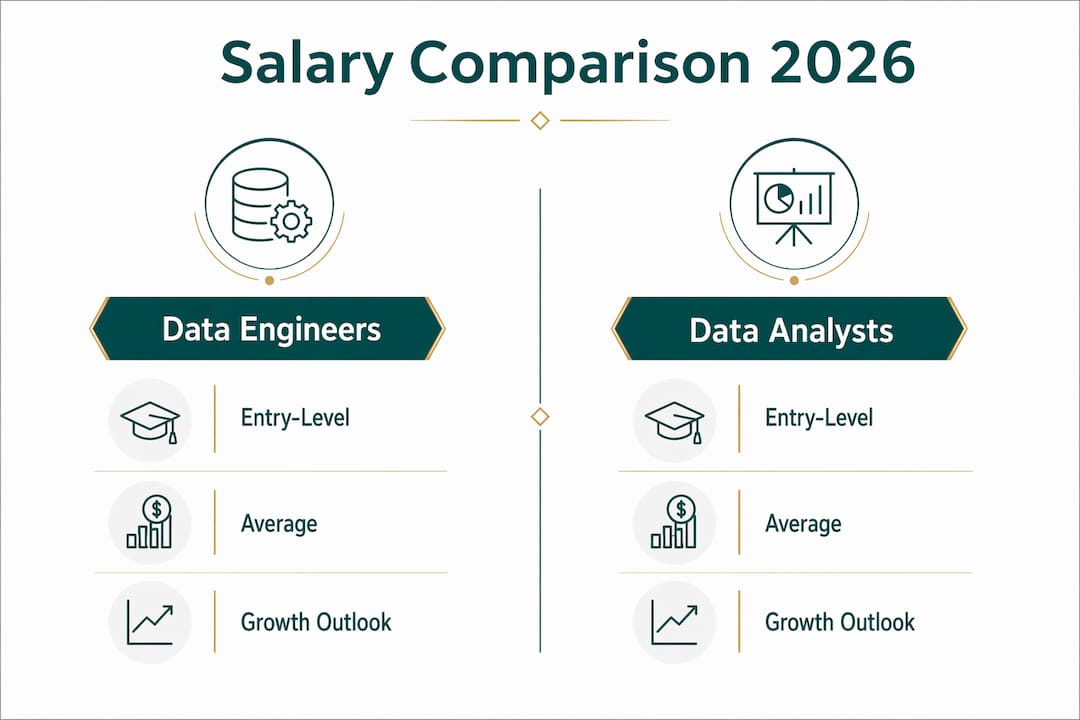
The numbers tell a clear story. The average data engineer salary on Indeed, drawn from roughly 9,900 active job postings, is $136,892. Data analyst roles advertise significantly lower, with entry-level positions often starting around $63,000. The entry-level gap alone is approximately $32,000, with engineers starting near $95,000 and analysts near $63,000.
That gap does not shrink with experience. It widens. As engineers take on system design, team leadership, and cross-functional data architecture, their compensation accelerates faster than analyst career paths allow.
| Role | Entry-Level Salary | Average Salary | Growth Outlook |
|---|---|---|---|
| Data Engineer | ~$95,000 | ~$136,892 | Very high |
| Data Analyst | ~$63,000 | ~$85,000–$95,000 | Moderate |
Geographic location amplifies the gap further. In tech hubs like San Francisco, Seattle, and New York, data analyst salaries in San Francisco are competitive, but engineering roles in the same markets command a premium that reflects the scarcity of qualified candidates. Companies in these markets actively bid against each other for engineers with cloud and pipeline experience.
The BLS projects 34% employment growth for data-adjacent engineering roles through 2034. That projection reflects sustained market demand that keeps salaries elevated even as the talent pool grows.
Why does business risk drive higher pay for data engineers?
Operational risk is the most underappreciated driver of the data engineering salary premium. When a data pipeline fails, the consequences are immediate and measurable. Dashboards go blank. Reports show stale numbers. Machine learning models make predictions on bad data. Revenue decisions get delayed.
Companies pay engineers a premium because the cost of a pipeline outage far exceeds the cost of a higher salary. That calculus is straightforward. A single day of bad data flowing into a financial reporting system can cost a company more than an engineer earns in a month.
“Companies prioritize hiring data engineers first to fix upstream data pipelines, reducing analyst idle time and justifying higher engineering pay.” — KORE1
The operational interfaces that drive job security in data engineering include:
- Orchestration schedules: Engineers own the timing and sequencing of every data job. A misconfigured schedule can delay reporting across an entire organization.
- Schema drift handling: When a source database changes its structure, engineers must catch and resolve the issue before it corrupts downstream tables.
- Retry policies and failure alerts: Engineers configure what happens when a job fails, including how many times it retries and who gets notified.
- Access controls: Engineers manage who can read and write to data systems, a responsibility with both security and compliance implications.
Supply-demand dynamics explain part of the pay gap, but operational liability makes data engineers more valuable than simple headcount math suggests. Employers are not just paying for skills. They are paying for accountability.
What career paths lead to higher earnings in data engineering?
Transitioning from analyst to engineer is achievable, but the path requires deliberate skill development. The technical learning curve is real, and the time investment is significant. Here is a practical sequence for analysts who want to close the pay gap:
- Master production-level SQL. Analysts use SQL for queries. Engineers use it to build transformation logic that runs automatically at scale. Learn window functions, CTEs, and query optimization.
- Learn Python for data pipelines. Pandas is a start, but production engineering requires writing modular, testable Python code. Study PEP 8, unit testing, and package management.
- Pick up a cloud platform. AWS, Google Cloud, and Azure each offer free tiers. Build a small pipeline project using S3 or BigQuery to demonstrate hands-on experience.
- Study orchestration tools. Apache Airflow is the industry standard. dbt is widely used for transformation. Both appear in the majority of data engineering job postings.
- Build a portfolio project. Create a public GitHub repository showing an end-to-end pipeline. Employers want proof of production thinking, not just theoretical knowledge.
The technical bar and remote work realities restrict data engineering availability and raise pay compared to analyst roles. Analyst positions are more widely remote-friendly, which increases competition and suppresses salaries. Engineering roles, especially those requiring infrastructure proximity or on-call coverage, command location and availability premiums.
Pro Tip: Check data analyst salaries in Seattle and New York to understand the geographic ceiling for analyst pay. Then compare those figures to engineering postings in the same markets. The gap will motivate your upskilling plan.
Key takeaways
Data engineering commands higher pay than analyst roles because engineers own the infrastructure, carry operational risk, and require a deeper technical skill set that takes years to build.
| Point | Details |
|---|---|
| Salary gap starts early | Entry-level engineers earn roughly $32,000 more than entry-level analysts, and the gap widens with experience. |
| Operational risk drives premiums | Pipeline failures stop business operations, so companies pay engineers a premium to maintain reliability. |
| Technical complexity justifies pay | Cloud infrastructure, orchestration, and production coding skills are scarce and command market premiums. |
| Market demand sustains high salaries | A 34% projected employment growth rate keeps engineering compensation elevated through 2034. |
| Analysts can transition with effort | Learning production SQL, Python, and one cloud platform is the most direct path to engineering-level pay. |
The real reason the pay gap keeps growing
I have spent years tracking salary trends across data roles, and the pattern is consistent. The pay gap between data engineers and analysts is not closing. It is widening. The reason is not that analysts are undervalued. It is that the operational complexity of modern data infrastructure keeps increasing, and the pool of engineers who can manage it is not growing fast enough to meet demand.
What surprises most analysts I speak with is how much of the engineering premium comes from accountability, not just skill. You can teach someone Airflow in a few months. Teaching someone to stay calm at 2 a.m. when a production pipeline fails and revenue reporting is broken takes a different kind of experience.
The other thing worth saying plainly: the data engineering salary advantage is not guaranteed forever. As tools like dbt and modern data platforms abstract away some infrastructure complexity, the line between analyst and engineer will blur for certain roles. The engineers who will continue to command top pay are those who understand systems deeply, not just tools. If you are planning a career move, invest in fundamentals. Cloud architecture, distributed systems, and data modeling will outlast any specific tool trend.
For analysts considering the transition, the window is still wide open. The demand is real, the pay difference is substantial, and the skills are learnable. The only question is whether you are willing to put in the work.
— Obinna
Benchmark your data salary with Fairpayguide
Knowing the market rate for your role is the first step toward negotiating what you deserve.
Fairpayguide tracks salary data across hundreds of data roles and locations, giving you a clear picture of where you stand. Whether you are a data analyst researching your next move or an engineer checking if your current pay is competitive, the salary lookup tool at Fairpayguide gives you real numbers to work with. You can also submit your salary anonymously to help build the most accurate compensation database for data professionals. The more data professionals share, the more accurate the benchmarks become for everyone.
FAQ
How much more do data engineers earn than data analysts?
Entry-level data engineers earn roughly $32,000 more than entry-level analysts, with engineers starting near $95,000 versus analysts near $63,000. The gap widens significantly at senior levels.
What skills make data engineers worth more to employers?
Data engineers manage cloud infrastructure on platforms like AWS and Google Cloud, write production code, and own pipeline reliability. Those skills carry operational risk that commands a salary premium over analyst roles.
Is the data engineering job market still growing in 2026?
Yes. The Bureau of Labor Statistics projects 34% employment growth for data-adjacent engineering roles through 2034, one of the highest growth rates in any technical field.
Can a data analyst transition into data engineering?
Yes. The most direct path involves mastering production-level SQL, learning Python for pipeline development, and gaining hands-on experience with a cloud platform like AWS or Google Cloud.
Does location affect the data engineer vs analyst pay gap?
Yes. In tech hubs like New York, Seattle, and San Francisco, the gap between analyst pay in New York and engineering salaries in the same market is especially pronounced due to competitive bidding for scarce engineering talent.