Salary Negotiation Explained: A Guide for Job Seekers

Salary negotiation is the process by which a job candidate and employer discuss and agree upon compensation terms to reach a mutually beneficial offer. Most job seekers treat the first offer as final, but that instinct costs them dearly. Candidates who negotiate earn over $600,000 more across a 30-year career than those who accept without question. That figure alone makes salary negotiation explained not just a career topic but a financial priority. The standard framework professionals use is a five-phase negotiation model: delay, research, build your case, make the ask, and close.
What are the key phases of effective salary negotiation?
Effective salary negotiation follows a structured process, not a single conversation. Each phase builds on the last, and skipping one weakens your position.
1. Delay naming a number
The first phase is about preserving leverage. When an employer asks for your salary expectations early, deflect politely. Say something like, “I’d love to learn more about the full scope of the role before discussing compensation.” This keeps the employer’s budget unknown to you, which is an advantage. The moment you name a number first, you anchor the conversation to your floor, not their ceiling.
2. Research market rates
Before any negotiation conversation, you need data. Use tools like the Fairpayguide salary lookup to find verified salary ranges for your specific role, industry, and location. Research total compensation, not just base pay. Bonuses, equity, and benefits all carry real dollar value.
3. Build your value case

Generic requests fail. Specific ones succeed. Prepare three to five concrete achievements that show your impact: revenue generated, costs reduced, projects delivered on time. Quantify everything you can. A hiring manager responds to “I reduced onboarding time by 30%” far more than “I’m a hard worker.”
4. Make the ask
State your number with confidence and silence after. Do not fill the pause with qualifications or apologies. A phrase like “Based on my research and experience, I’m targeting $X” is direct and professional. Most employers build 10–20% headroom into initial offers and expect candidates to negotiate. That means the first offer is rarely the best offer.
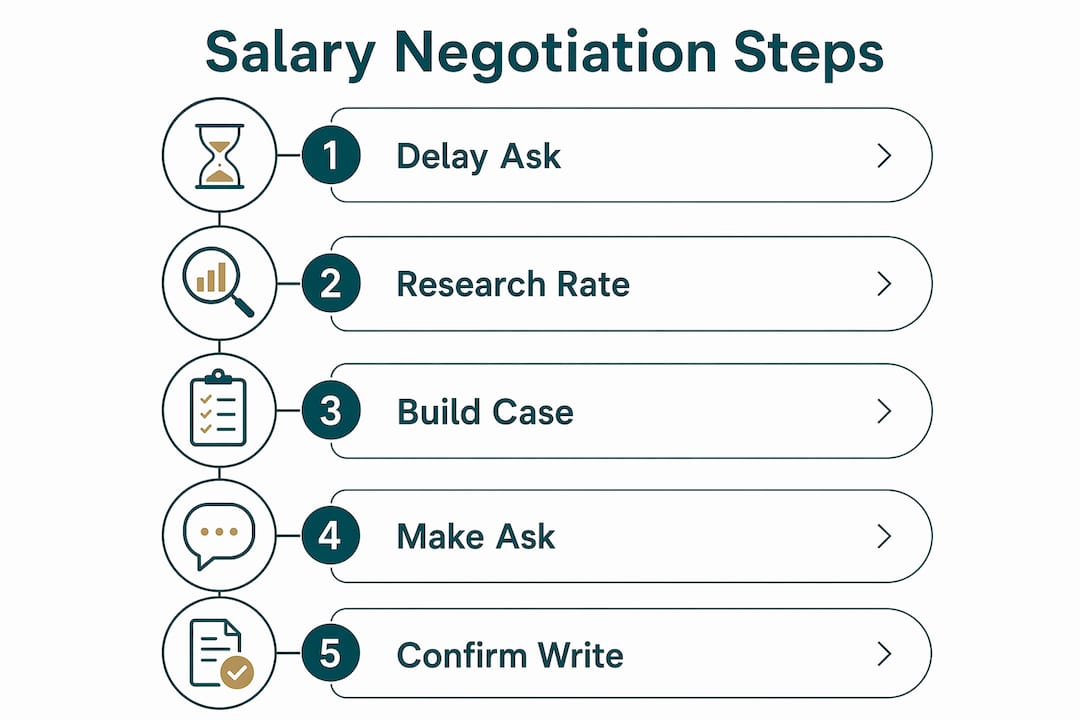
5. Close with written confirmation
Once you reach an agreement, get it in writing immediately. Verbal agreements are not binding, and details can shift between a phone call and a formal offer letter. Request a revised offer letter within 24–48 hours of any verbal commitment.
Pro Tip: Practice your ask out loud before the real conversation. Rehearsing removes hesitation and makes your tone sound confident rather than tentative.
How can candidates negotiate beyond base salary?
Base salary is one line in a compensation package, and it is often the most rigid one. Total compensation includes equity, bonuses, PTO, signing bonuses, remote work flexibility, and more. Focusing only on base pay leaves real value on the table.
In the public sector and at large corporations with strict pay bands, the base salary number is sometimes fixed by policy. That does not mean the offer is final. It means you shift the conversation to other components. Here are the most common non-salary levers worth negotiating:
- Signing bonus: A one-time payment that does not affect the salary band. Employers approve these more easily than base increases.
- Additional PTO: Extra vacation days cost the company less than a salary bump but carry significant personal value.
- Remote or hybrid work: Eliminating a commute saves you money and time. Frame it as a productivity benefit for the employer.
- Equity or stock options: At startups and growth-stage companies, equity can exceed base salary in long-term value. Ask about vesting schedules and cliff periods.
- Performance review timing: Negotiate an early review at 6 months instead of 12. This gives you a faster path to a raise once you prove your value.
- Professional development budget: Certifications, conferences, and courses have direct career value. Many employers have discretionary budgets for this.
Understanding what base salary means and where it fits within the full package helps you negotiate each component with clarity. When you treat compensation as a package rather than a single number, you create more room to reach a deal that works for both sides.
Pro Tip: When an employer says the salary is firm, respond with “I understand. Can we look at the overall package?” This keeps the conversation open without creating friction.
What psychological and communication strategies increase negotiation success?
The way you negotiate matters as much as what you ask for. Employers generally expect candidates to negotiate and appreciate a professional, positive approach. Aggression signals poor judgment. Confidence signals self-awareness.
A few communication principles make a measurable difference:
- Use phone or video, not email. Phone and video negotiations outperform email because tone, rapport, and real-time responses all work in your favor. Email strips out nuance and makes counteroffers feel transactional.
- Let silence work for you. After stating your number, stop talking. Silence creates pressure on the other side to respond. Filling the pause with justifications weakens your position.
- Avoid ultimatums. Phrases like “I need this or I’m walking” damage the relationship before it starts. Frame requests as collaborative, not confrontational.
- Never apologize for negotiating. Phrases like “I’m sorry to ask, but…” signal that you believe the ask is unreasonable. It is not. Negotiation is a normal part of the hiring process.
- Anchor high but realistically. Name a number at the top of your researched range. This gives you room to move while still landing where you want.
The tone you use in negotiation also sets the tone for your working relationship. Maintaining positive relationship-building during the process signals emotional maturity and professionalism. Hiring managers remember how candidates behave under pressure.
How to use competing offers and current employment as leverage
Competing offers are the strongest form of leverage in salary negotiation. Using active job interviews or offers as leverage can increase your offer, but the approach must stay professional. Threatening to leave or using an offer as a bluff will backfire if the employer calls it.
The right way to use a competing offer looks like this:
- Be honest and specific. Say “I have an offer from another company at $X. I prefer this role, and I’d like to see if we can get closer to that number.” This is direct without being aggressive.
- Do not fabricate offers. Employers verify. A false offer destroys trust and can cost you the job entirely.
- Use your current employment status. If you are currently employed, you negotiate from a position of strength. You do not need the offer. That posture changes the dynamic.
- Frame it as mutual benefit. “I want to make this work” keeps the conversation collaborative. “Match this or I leave” creates an adversarial dynamic.
Understanding why job offers vary in pay across companies and industries helps you contextualize competing offers accurately. A higher number from a lower-tier company does not always translate to equivalent leverage at a top-tier employer.
Protecting your reputation matters throughout this process. Word travels in most industries. A candidate who plays games with offers or burns bridges during negotiation becomes known for it.
Key Takeaways
Salary negotiation is a structured, learnable skill that directly determines your lifetime earnings. Candidates who prepare, research, and ask confidently reach better outcomes at every career stage.
| Point | Details |
|---|---|
| Negotiate every offer | Most employers build 10–20% headroom into initial offers and expect candidates to push back. |
| Follow the five-phase model | Delay, research, build your case, make the ask, and close with written confirmation. |
| Negotiate total compensation | When base salary is fixed, shift to signing bonuses, PTO, equity, and early review timelines. |
| Use phone or video calls | Real-time conversations outperform email for tone, rapport, and reaching agreement faster. |
| Get everything in writing | Verbal agreements are not binding; always request a revised offer letter within 24–48 hours. |
The negotiation fear that costs people the most
The single biggest obstacle I see is not lack of skill. It is the belief that asking will make the employer rescind the offer. That fear is almost never grounded in reality. Employers do not pull offers because candidates negotiate professionally. They pull offers when candidates behave erratically or make unreasonable demands.
What I have found is that preparation is the cure for that fear. When you walk into a negotiation knowing your market rate, your value, and your target number, the conversation stops feeling like a confrontation and starts feeling like a business discussion. That shift in mindset changes everything.
The long-term math is also worth sitting with. A $5,000 difference in starting salary compounds over years through raises, bonuses, and future offer benchmarking. Most people spend more time researching a laptop purchase than they spend preparing for a salary conversation that affects their finances for years. That imbalance is worth correcting.
My advice: treat every offer as the opening of a negotiation, not the conclusion of one. You have more room than you think.
— Obinna
Salary data that supports your next negotiation
Preparation is the foundation of every successful salary conversation. Fairpayguide gives you the market data you need to walk in with confidence.
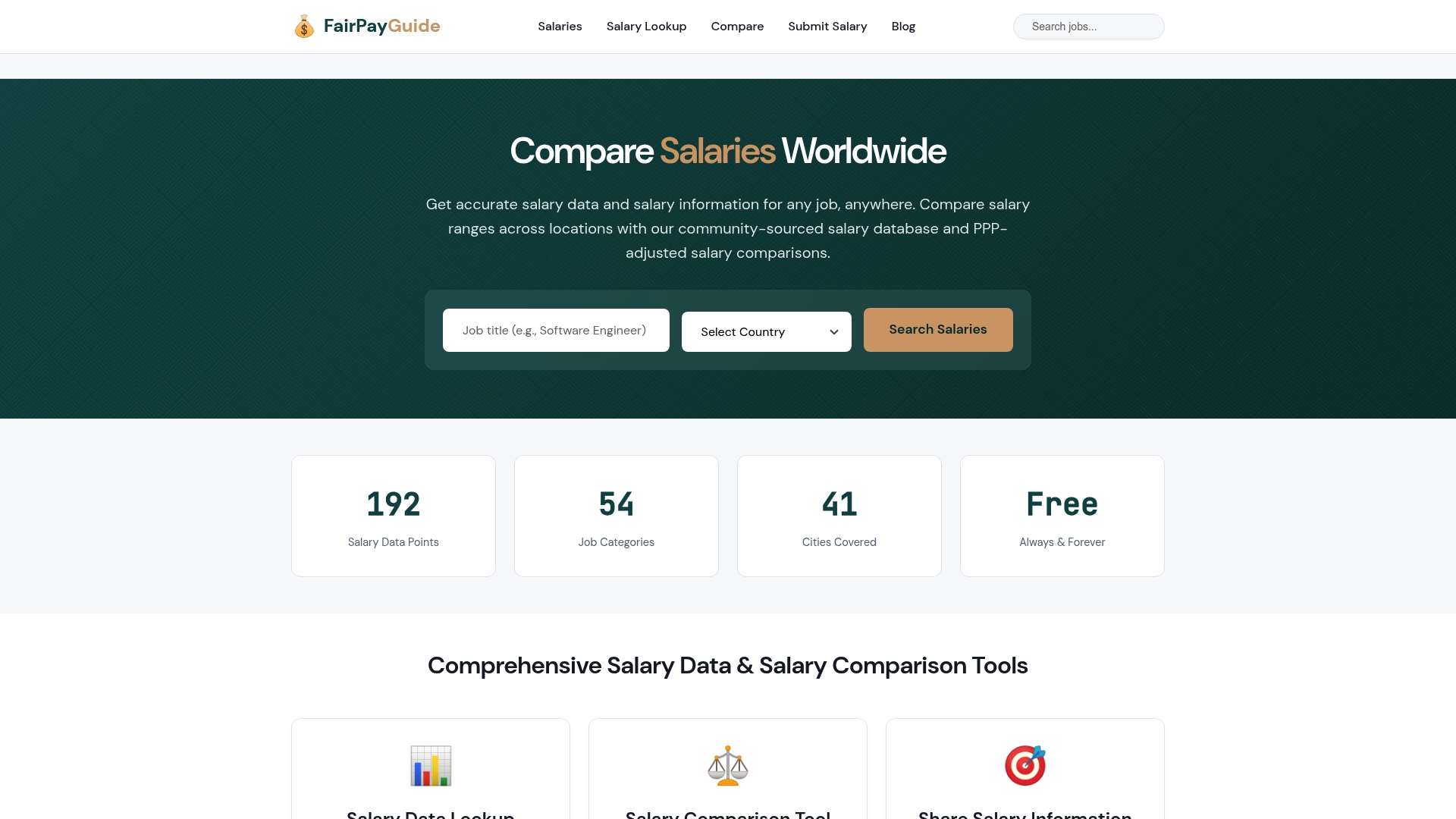
Use the Fairpayguide salary lookup to find verified salary ranges for your role, industry, and location before your next negotiation. If you want to contribute to salary transparency and help other job seekers benchmark accurately, you can submit your salary anonymously in minutes. The more data the community shares, the sharper every negotiation becomes. Start with the numbers, and the conversation gets easier from there.
FAQ
What is salary negotiation?
Salary negotiation is the process where a job candidate and employer discuss and agree on compensation terms. The goal is a mutually acceptable offer that reflects the candidate’s market value and the employer’s budget.
Will negotiating hurt my chances of getting the job?
Negotiating professionally does not cost you the offer. Employers expect candidates to negotiate and view it as a sign of confidence and self-awareness.
What should I say when asked for my salary expectations?
Deflect early by saying you’d like to learn more about the role before discussing numbers. This preserves your leverage and keeps the employer’s budget unknown to you.
How do I negotiate if the salary is non-negotiable?
When base salary is fixed, pivot to non-salary components like signing bonuses, additional PTO, remote work arrangements, equity, or an early performance review.
How do I know what salary to ask for?
Research your market rate using tools like the Fairpayguide salary comparison tool and target the top of the verified range for your role, experience level, and location.