Top 4 LaborIQ.co Alternatives for 2026

Comparing salaries and compensation data across multiple locations and job families is often inconsistent and confusing. Most tools either rely on manual data entry, lack global coverage, or do not offer live integrations with HR systems. This comparison explores pricing, data sources, and workflow features so you can match a compensation benchmarking platform to your team’s needs without starting with LaborIQ.co.
Table of Contents
FairPayGuide
At a Glance
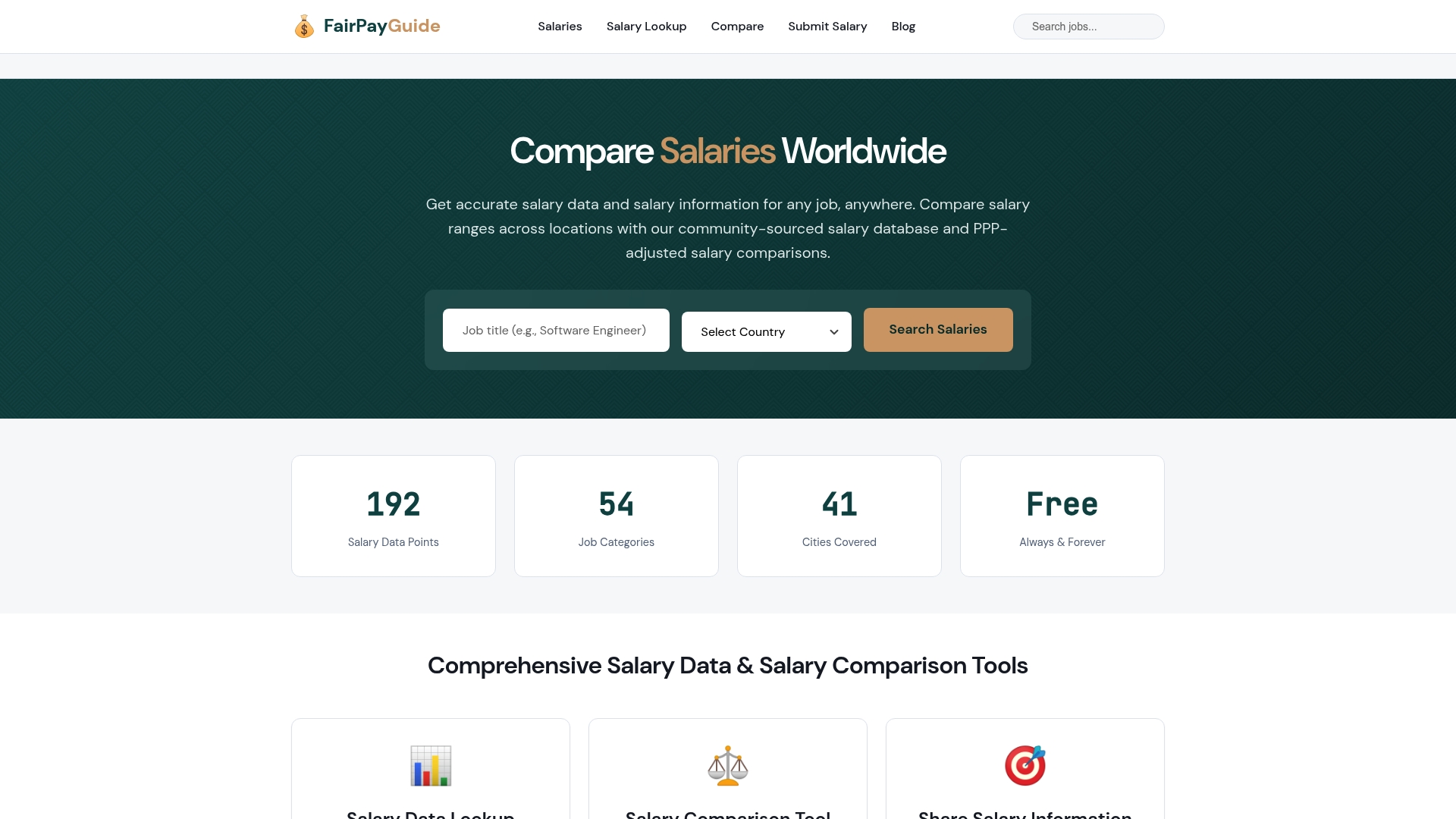
Adjusts community salary submissions using World Bank PPP indicators to produce comparable pay figures across countries. The site accepts anonymous contributions, and applies validation before publishing. Data updates happen frequently, so city and country comparisons reflect recent submissions.
Core Features
FairPayGuide offers a salary lookup for nearly any job and location and a side by side comparison tool that applies PPP adjustments so amounts become comparable across currencies. The site accepts anonymous, community-sourced salary submissions and shows percentile ranges plus cost of living context. Real time data updates and visible validation rules help you check how a figure was adjusted.
Key Differentiator
FairPayGuide combines community submissions with PPP adjustments to create international comparisons that account for purchasing power differences. That combination reduces the manual work of converting currencies and applying cost of living multipliers. The approach focuses on raw pay comparison rather than adding speculative benefit or job satisfaction metrics.
Pros
Free to access and supported by unobtrusive advertising, FairPayGuide removes paywall friction for salary research. Its PPP-adjusted comparisons and percentile ranges give you clearer context when comparing offers between countries or cities. The community contribution model and clear methodology notes improve traceability so you can see which entries drove a result and how they were adjusted.
Cons
- Data depends on community submissions, which may vary in accuracy or be sparse in less common locations
Who It’s For
Professionals and job seekers who need quick, privacy-friendly comparisons of base pay across international locations. Employers and recruiters wanting a rough benchmark for global roles will find the PPP adjustments useful. People who need benefits, stock, or satisfaction metrics should look elsewhere for supplementary data.
Unique Value Proposition
Provides PPP-adjusted salary comparisons and percentile context at no cost, so you can compare offers across cities without doing currency conversions or manual cost of living math. That saves time when you must choose between remote or relocated roles and when you need a defensible figure for negotiation.
Real World Use Case
A software engineer evaluates an offer in London and wants a fair comparison to San Francisco. They pull salary ranges and PPP-adjusted values, check percentile ranks, and factor in cost of living to decide if the base pay compensates for relocation. The anonymous submission feature also lets them add their own data to improve future comparisons.
Website: https://fairpayguide.com
Pave
At a Glance
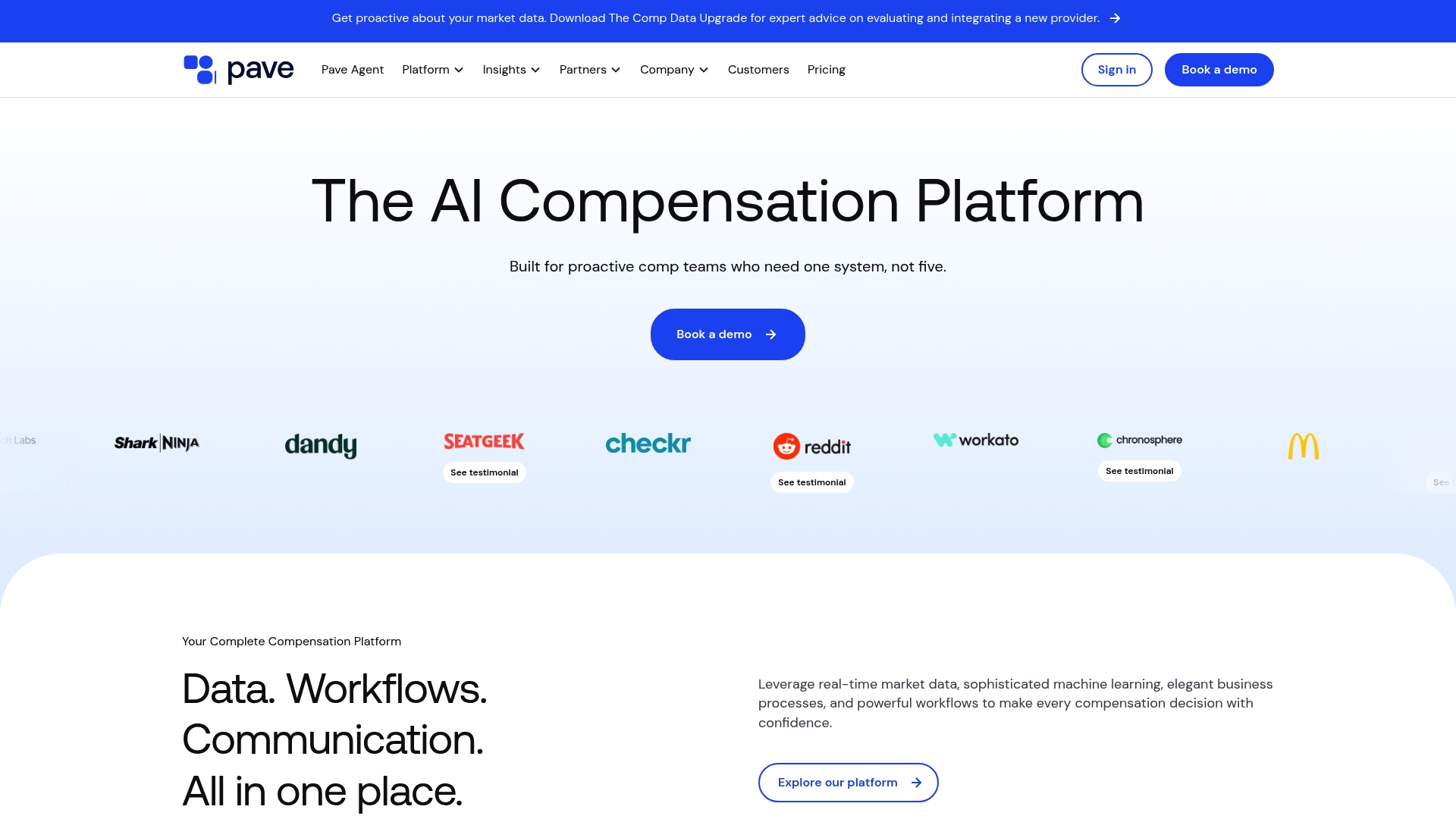
Pave reports market data from over 9,000 companies. That dataset feeds its AI driven job matching and job leveling capabilities. The platform targets compensation planning, pay structuring, and total rewards workflows across locations and job families.
Core Features
Pave combines real time compensation benchmarking with AI driven job matching and leveling, which helps map internal roles to market equivalents. Automation handles data collection and routine pay structure updates while workflows support merit cycles, equity management, and pay adjustments. Flexible modules let teams separate benchmarking, planning, and total rewards communication by need.
Key Differentiator
The product’s standout feature is its focus on AI driven job matching tied directly to market data. The market data above integrates with leveling tools to produce salary and equity recommendations. That close coupling of job matching and market data aims to make compensation decisions more consistent across global teams.
Pros
Pave offers a unified platform that reduces the number of spreadsheets and point tools HR teams must maintain. Its real time benchmarking plus AI driven leveling gives your compensation team a single source for market comparisons and internal alignment. The vendor emphasizes transparency and supports large deployments, and it advertises extensive integrations with HRIS, ATS, and EMS systems to connect payroll and people data.
Cons
-
Customer onboarding can be heavy. New users report the platform’s depth requires detailed setup and training, especially for premium modules.
-
Performance depends on source data quality. The product needs clean HR data and tight integrations to deliver reliable outputs.
-
Pricing transparency is limited. Public materials do not list straightforward tier pricing and smaller organizations may face cost constraints.
When It May Not Fit
If your HR systems contain fragmented or poor quality data, Pave’s dependency on existing systems will limit value. Small HR teams without a technical lead may find setup time and configuration burdensome. Organizations needing a clear self serve price list will find limited public pricing information.
Who It’s For
Large and enterprise scale HR and compensation teams that manage pay across multiple countries will benefit most. Teams that already integrate HRIS and payroll systems and that can dedicate technical resources to setup will extract the most value. Compensation analysts who prioritize market linked job leveling and structured pay cycles will find this platform relevant.
Real World Use Case
According to the company, a global SaaS firm used Pave to speed up its annual pay review and reduced the cycle from months to days. The team paired AI driven leveling with live benchmarks to adjust pay bands and improve transparency during reviews. That deployment focused on merit cycles and equity adjustments across regions.
Pricing
Public pricing is not listed. The vendor indicates a custom or enterprise pricing model and advertises a free tier for basic benchmarking data. Expect vendor sales engagement for detailed quotes and implementation costs.
Website: https://pave.com
Ravio
At a Glance
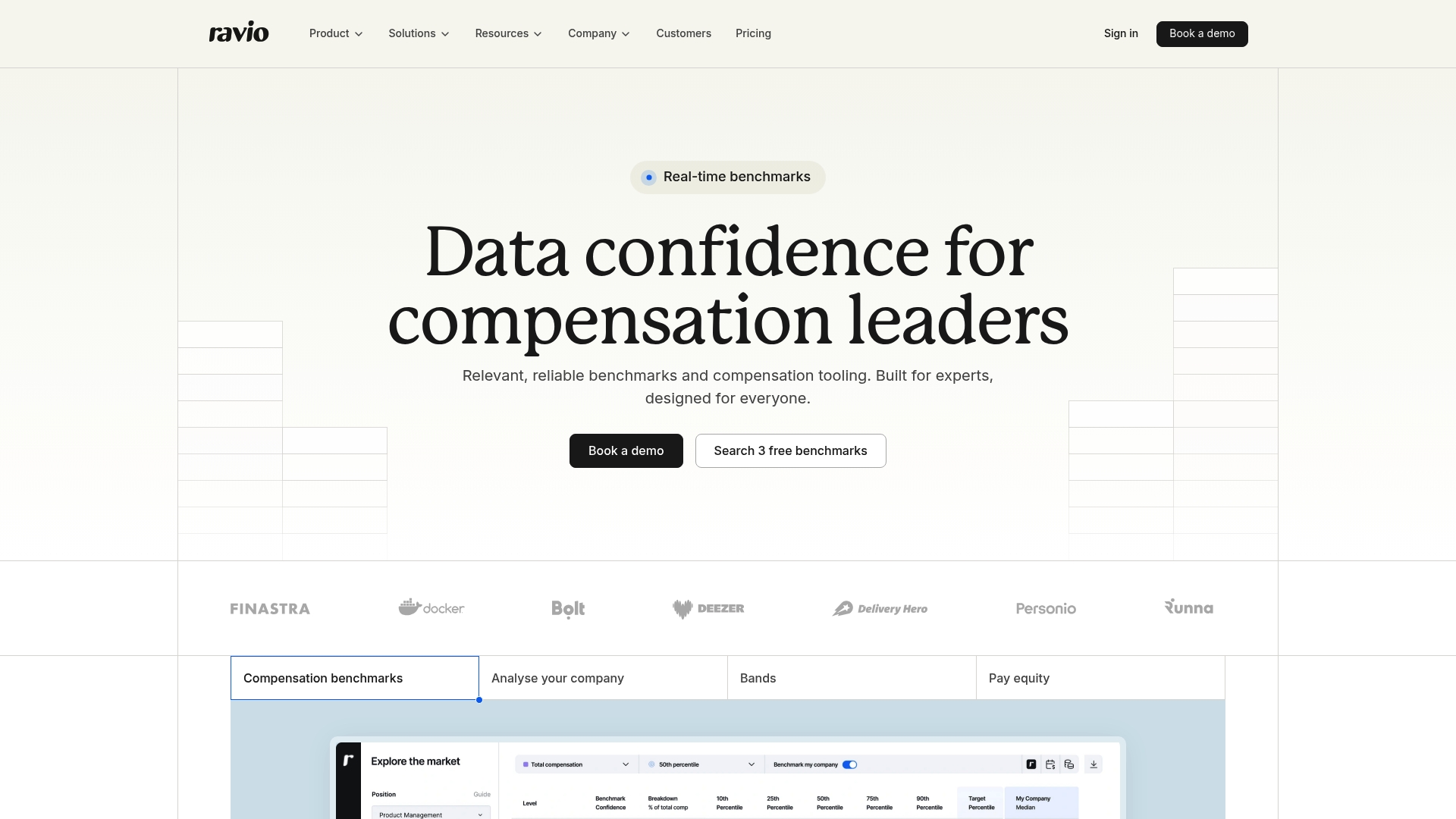
Ravio reports over 618,000 compensation datapoints collected from the HR systems of more than 1,600 companies. The dataset spans 300+ roles across 50+ countries, which supports cross market comparisons and localized band building. That scope aims to give HR teams live market context while they set pay bands and review equity.
Core Features
Ravio centralizes market benchmarks and pay equity tools and links them to client HR records for automated updates. The platform supports salary band creation, role mapping, and scenario planning alongside threshold and gap analysis. Integration support spans HRIS, ATS, and cap table systems so data flows from source systems into the analytics.
Key Differentiator
Ravio’s standout claim is its source model. The vendor advertises that it draws data directly from client HR systems rather than surveys. That approach explains the platform’s emphasis on live data coverage and modular pay equity workflows. For teams that can feed HR data, the result is benchmarks tied closely to internal roles and segments.
Pros
Ravio keeps market figures current by pulling from connected HR systems, so benchmarks reflect recent hires and changes rather than periodic survey snapshots. Integration breadth reduces manual upload work and supports ongoing pay reviews, which helps compensation teams focus on strategy. The analytics cover role mapping and scenario planning, offering the tools needed for salary band construction and pay equity reporting.
Cons
-
Heavy integration dependency. Setup requires reliable HR system connections and may stall if a client uses a niche payroll system.
-
Cost variability. Pricing scales with company size and selected modules, which may place it out of reach for smaller teams.
-
Learning curve. The platform’s depth can require structured onboarding and training to unlock advanced analytics.
-
Enterprise focus. The product targets organizations with existing HR infrastructure rather than very small businesses.
When It May Not Fit
If your organization lacks a central HRIS or cannot grant data access, Ravio will deliver limited value because its benefit comes from connected records. Small companies with tight budgets will likely find the pricing model hard to justify. Teams that need simple, one off salary checks may prefer lighter, lower cost tools.
Notable Integrations
Ravio integrates with a wide set of HR and recruiting systems. Notable connectors include Workday, BambooHR, Personio, Greenhouse, Lever, SAP SuccessFactors, Namely, and Gusto. These integrations cover HRIS, applicant tracking, and payroll adjacency to support automated benchmarking workflows.
Who It’s For
Ravio fits HR and Compensation professionals, Total Rewards teams, and senior leaders at mid sized to large organizations. It suits teams that already collect employee records in modern HR systems and that run recurring salary reviews. Organizations with growth plans or multi location hiring will benefit from that market coverage.
Real World Use Case
A fast growing tech company feeds its HRIS into Ravio to benchmark software engineer roles across three countries. The compensation team uses scenario planning to compare proposed bands against live market figures and to run pay equity checks before final approvals. That process sped internal approvals and aligned offers with local markets.
Pricing
Pricing depends on company size, selected modules, and market data needs. The vendor states pricing for a 500 person company starts at £5,000 per year. Custom quotes are available for larger installs and additional modules.
Website: https://ravio.com
Figures
At a Glance
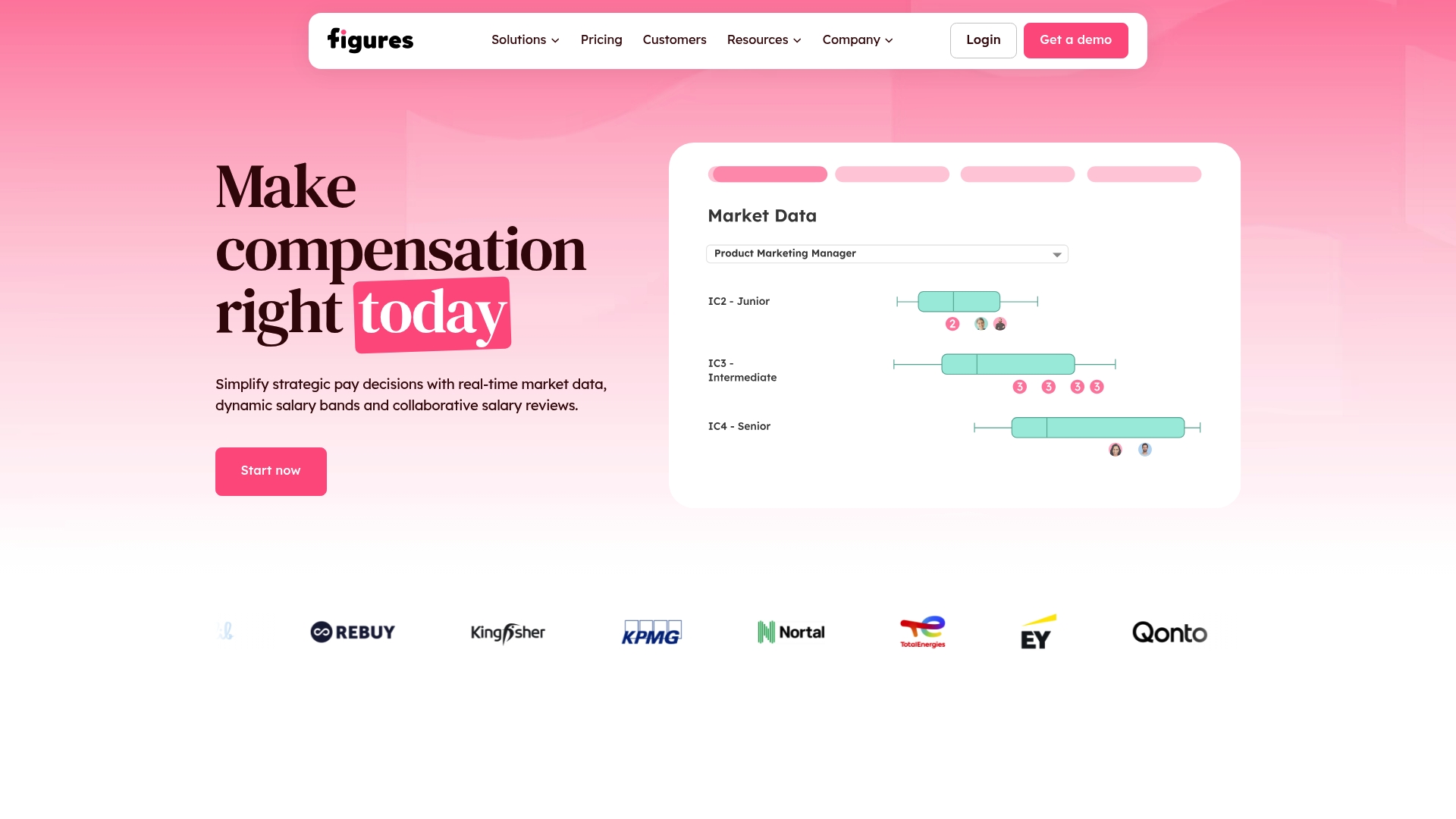
Figures reports over 3.5 million datapoints across multiple countries. The platform combines market benchmarks with collaborative pay review workflows and pay equity analysis. It targets HR teams that need structured salary bands and evidence for compliance and transparency.
Core Features
Figures delivers real-time market salary data paired with tools to build and maintain structured salary bands. The product supports live collaborative compensation reviews and includes pay gap detection with remediation scenario modeling. It also connects to HRIS systems and external benchmarks for employee positioning against the market.
Key Differentiator
Figures integrates Mercer benchmark data directly into its workflow tools, which reduces manual benchmarking work. That integration plus collaborative review tracking lets teams move from spreadsheet debate to documented decisions.
Pros
Trusted data sources and external benchmarks give HR teams a reliable reference for pay decisions. The platform supports global and multi-location setups and helps maintain consistent salary bands across regions. Built-in collaboration and analytics simplify complex pay reviews and support documentation needed for compliance and transparency.
Cons
-
Pricing is tailored per organization, which makes simple public comparison difficult for smaller buyers.
-
The platform requires ongoing data updates and some process change, which means commitment from HR and leadership.
-
Smaller HR teams may find the depth of analytics and workflows complex without dedicated compensation resources.
When It May Not Fit
If your team has fewer compensation specialists, the platform may feel overly complex. If you need fixed, transparent public pricing to compare vendors quickly, the tailored model may slow procurement. Organizations that do not plan to keep external market data current will not get full value.
Notable Integrations
-
30+ HRIS systems
-
Mercer benchmark data
-
SAML SSO
-
Google Workspace and Microsoft 365 authentication
Who It’s For
HR and compensation managers at mid-sized to large international companies will get the most value. Teams that must document pay decisions for compliance or pay transparency laws will benefit. Organizations with multiple locations and a need to standardize salary bands also fit this product.
Real World Use Case
A tech company uses Figures to benchmark salary ranges across several countries. The team runs structured pay reviews with live tracking and models remediation scenarios for detected pay gaps. That workflow improved transparency and supported communication to managers and employees.
Pricing
Pricing is based on company size and module selection. A demo is recommended to get a personalized quote and to match modules to your compensation processes.
Website: https://figures.hr
Comparison of alternatives
FairPayGuide provides unique benefits for professionals needing quick, privacy-friendly salary comparisons across international locations. This segment evaluates alternative solutions for compensation benchmarking, highlighting specific features and considerations relevant to discerning users.
Data Integration and Benchmark Accuracy
Among the alternatives, Ravio excels with its live benchmark data integration, offering automated updates from connected HR systems. Unlike community-sourced platforms such as FairPayGuide, Ravio’s reliance on internal HR records provides more precise alignment with organizational needs and real-time market changes. This feature makes it particularly effective for enterprises that have well-established HR infrastructures capable of providing dependable data feeds.
Accessibility and Affordability
FairPayGuide maintains an advantage with its free-of-charge access model, supported by unobtrusive advertising. In contrast, platforms like Pave and Figures employ subscription-based pricing structures that can scale depending on organization size and feature usage. Large enterprises with extensive compensation planning needs might favor these paid solutions for their workflows, despite the fee investment.
Best fit
- Privacy-conscious professionals requiring PPP-adjusted international salary comparisons without upfront cost will find FairPayGuide to be the option.
- Compensation teams prioritizing advanced equity analysis and real-time market benchmarking should explore Ravio for its integration capabilities.
- Large organizations focused on transparent workflows for structured pay reviews and compliance needs can benefit from Figures’ collaboration features and Mercer data integration.
- Enterprises with extensive compensation planning needs across borders should consider Pave for its AI-driven job leveling and automated pay reviews.
Our pick
FairPayGuide stands out as the preferred choice for professionals and recruiters seeking accessible tools for accurate, PPP-adjusted salary comparisons, delivered through a free and user-friendly interface. Unlike its competitors, this platform is highly privacy-friendly and avoids complex pricing schemes. However, teams requiring features like automated HRIS integration or the most advanced equity analysis tools may benefit from exploring paid platforms such as Ravio and Figures.
Salary benchmarking platforms offer distinct capabilities for job seekers and HR professionals alike, each tailored to specific needs such as international comparisons, compensation planning, and total rewards workflows.
| Product | Key Differentiator | Best For | Pricing | Notable Limitation |
|---|---|---|---|---|
| FairPayGuide | Community-sourced, PPP-adjusted salary comparisons | Professionals needing global base pay comparisons | Free to access | Relies on community data, sparse in uncommon locations |
| Pave | AI-driven job matching and leveling tied to real-time market data | Large HR teams focusing on pay structuring | Price not published | Heavy onboarding required for setup |
| Ravio | Live benchmarks from client HR system integrations | Mid to large organizations with integration-ready HR systems | Starts at £5,000/year for 500 users | Setup dependent on robust and connected HR/Payroll infrastructure |
| Figures | Mercer benchmark integration with structured pay review workflows | Multi-location companies documenting pay decisions | Price not published | Tailored pricing model may deter smaller buyers |
When looking for reliable laboriq.co alternatives to compare international salaries, understanding pay differences across countries can be challenging. Professionals and job seekers need data that reflects local purchasing power to make fair comparisons and informed decisions.
Fairpayguide adjusts community-submitted salary data using World Bank PPP indicators to deliver clear, comparable figures worldwide. This approach removes the hassle of manual currency conversions and cost of living calculations, helping you evaluate offers easily. If you want transparent salary insights with percentile ranges and ongoing updates, explore Fairpayguide.
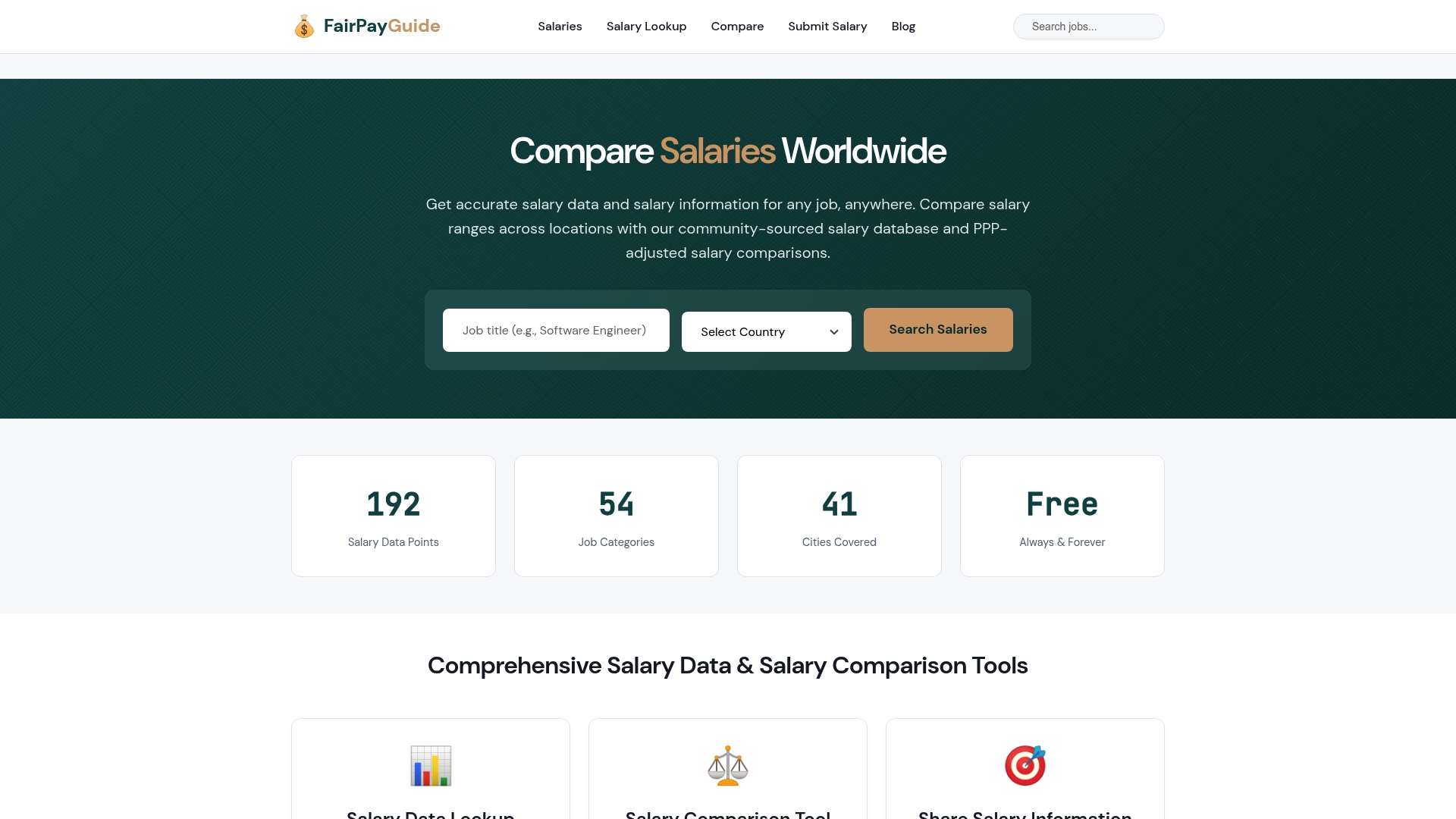
Take control of your career moves by checking pay ranges adjusted for real purchasing power. Visit https://fairpayguide.com to review recent salary data and contribute your own anonymously to improve future comparisons.
FAQ
How does Fairpayguide help with salary comparisons?
Fairpayguide provides PPP-adjusted salary comparisons, making it easier to compare offers across different countries and cities. Its community-sourced data updates frequently and includes percentile ranges, which help you make informed decisions. You can use it to see how your potential salary stacks up against market averages, simplifying your negotiation process.
What is the difference between Fairpayguide and Pave?
Pave excels in AI-driven job matching and job leveling, providing a structured approach to compensation planning and total rewards workflows. Fairpayguide, on the other hand, focuses on community contributions and PPP adjustments for international comparisons, offering a different use case in salary data visibility. You might choose Fairpayguide if you prioritize low-cost salary comparisons without complex implementations.
Can I access Fairpayguide without any cost?
Fairpayguide is free to access, supported by unobtrusive advertising, so you can use it without worrying about subscriptions or fees. Its accessibility makes it a convenient option for professionals seeking quick salary insights without the hassle of paywalls. This is especially beneficial for those trying to navigate complex salary negotiations.
Which platform provides the most real-time data updates?
Ravio emphasizes live data coverage by pulling directly from client HR systems, providing up-to-date market benchmarks. Although Fairpayguide offers frequent updates through community submissions, Ravio’s direct data integration may give it an edge in accuracy and timeliness. Consider your organization’s capability to support such integrations before making a decision.
How does Fairpayguide’s validation process work?
Fairpayguide applies a thorough validation process to community-sourced salary submissions before publishing. This ensures that the data you see is reliable and accurate, allowing for greater confidence in salary comparisons. Utilizing this feature can enhance your understanding of market trends and improve your decision-making.