Top 5 opacity.hr Alternative Platforms 2026

Choosing pay equity compensation software that delivers reliable benchmarks and compliance support is often confusing and slow. Many platforms only offer limited data coverage, require complex manual setup, or keep key pricing hidden until a sales call. You can weigh each platform’s data quality, integration depth, and pricing transparency to select the best fit without wasted procurement steps.
Table of Contents
FairPayGuide
At a Glance
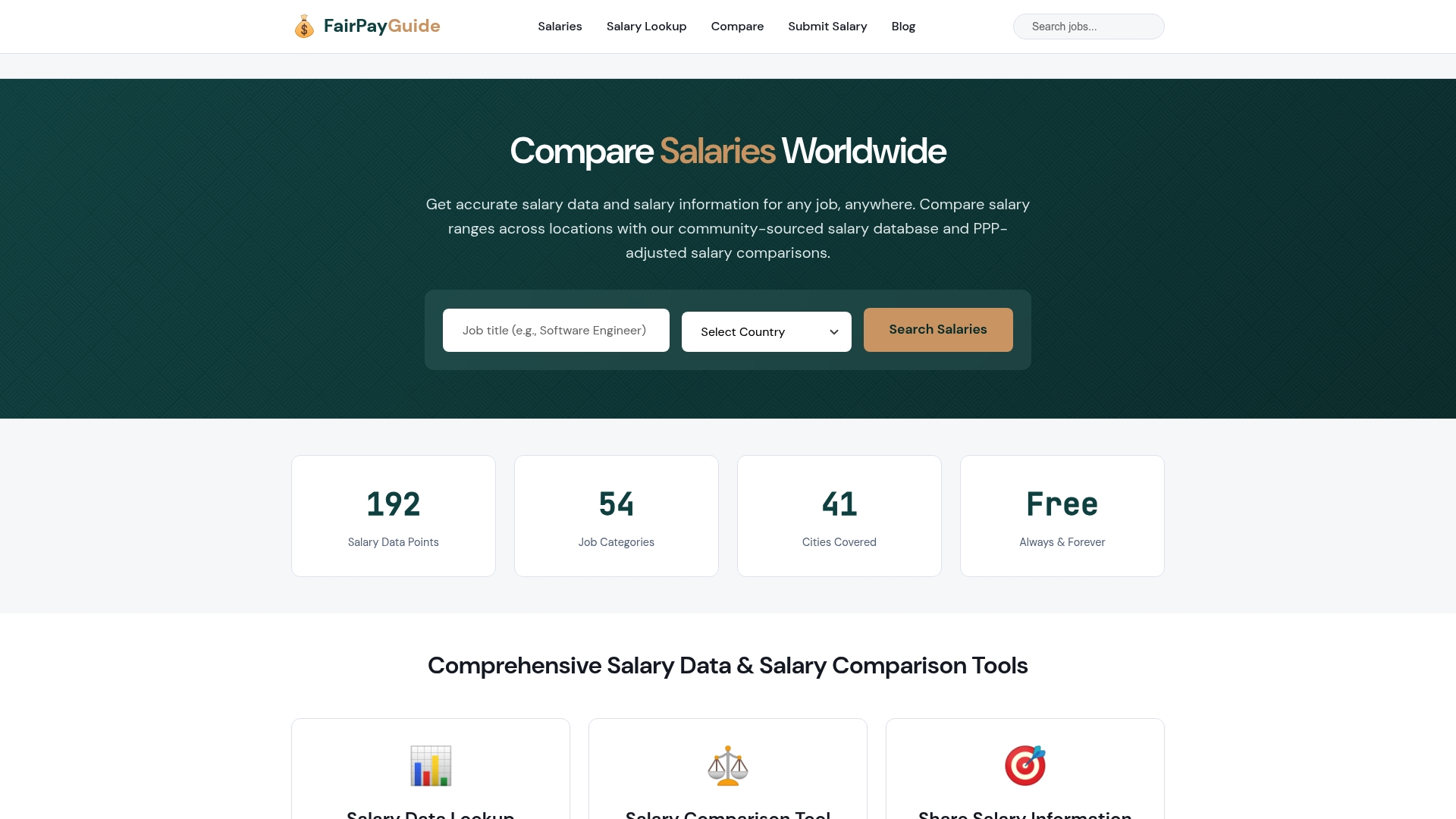
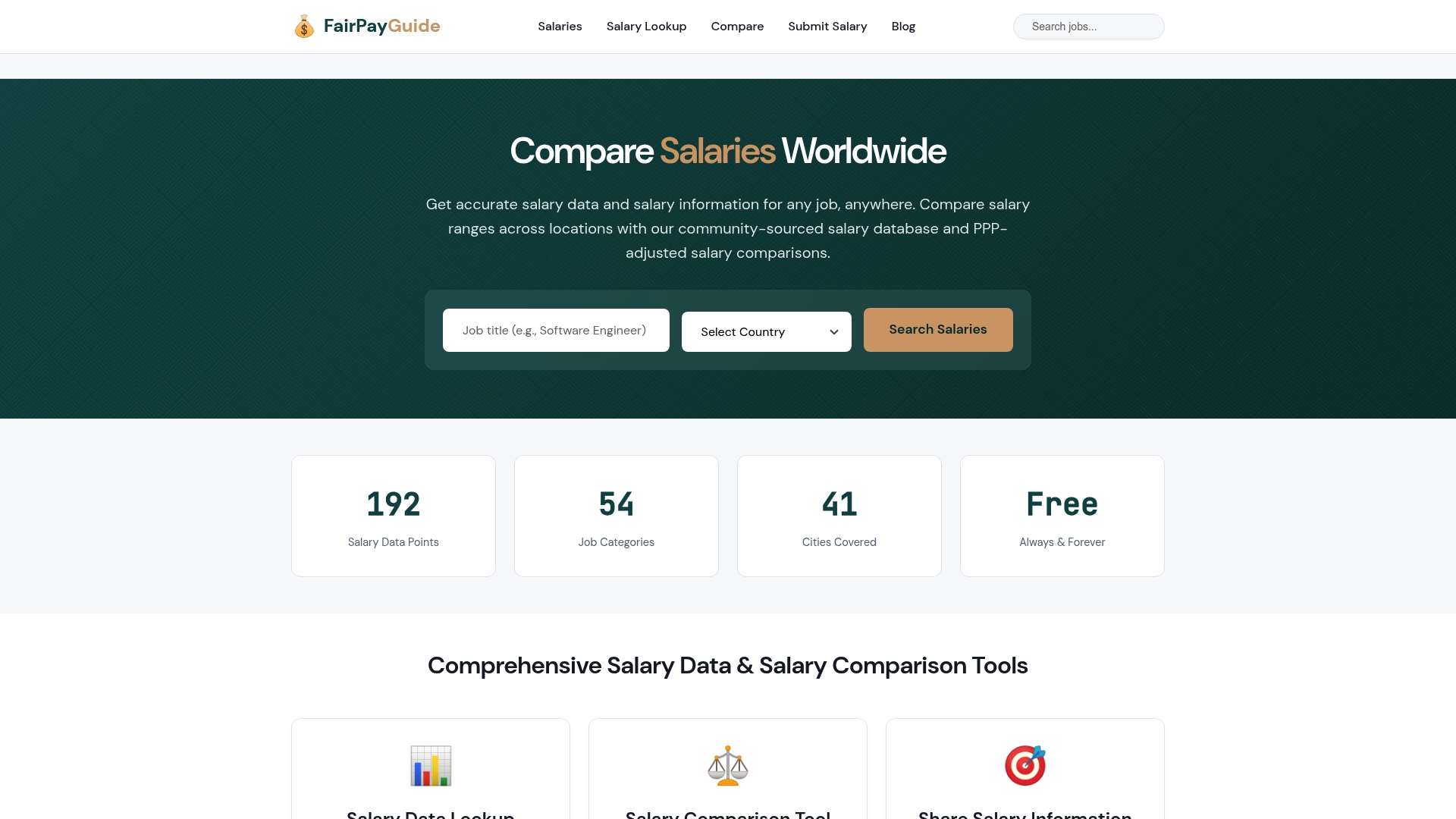
FairPayGuide reports PPP adjusted salary figures by combining anonymous community submissions with World Bank inputs. The site also provides city comparison tools and cost of living analysis. The platform is free to use and focuses on improving transparency through community contributions.
Core Features
FairPayGuide offers salary lookup for job titles across cities and countries, and it shows detailed salary percentiles and ranges. The site includes city comparison tools with purchasing power parity adjustments and cost of living breakdowns. It accepts anonymous salary submissions and exposes an API for developers to pull data into other tools.
Key Differentiator
FairPayGuide centers on community sourced salary data adjusted for purchasing power parity to produce currency neutral comparisons. That approach combines local submissions and external indexes to reveal real buying power differences. The result is clearer international comparisons than nominal salary lists alone.
Pros
FairPayGuide is free and relies on community contributions to expand coverage and keep data current. The PPP adjusted figures and cost of living analysis let you compare roles across countries with clearer economic context. Anonymous submissions and percentile reporting help you see typical and outlier compensation levels, and the API supports integration into internal reports or candidate dashboards.
Cons
- Data quality depends on community submissions, which can include outliers and limited points for niche roles.
Who It’s For
This site suits job seekers who need location specific salary ranges and professionals weighing relocation or remote offers. HR and recruiting teams use it to benchmark compensation with purchasing power context. Developers and data teams can consume the API to embed salary figures into tools and reports.
Unique Value Proposition
PPP adjusted salary figures tied to anonymous community submissions and World Bank inputs give you a single reference for international comparisons. That single reference reduces confusion when comparing nominal salaries across currencies and cost structures. Teams using this reference can present relocation offers or remote pay proposals with a clearer view of economic value.
Real World Use Case
A software engineer in San Francisco compares median pay for their role with London using PPP adjusted numbers. They present the comparison during negotiations to justify a salary for remote work. The city comparison and percentile detail help HR quantify a fair remote compensation package.
Website: https://fairpayguide.com
Figures
At a Glance
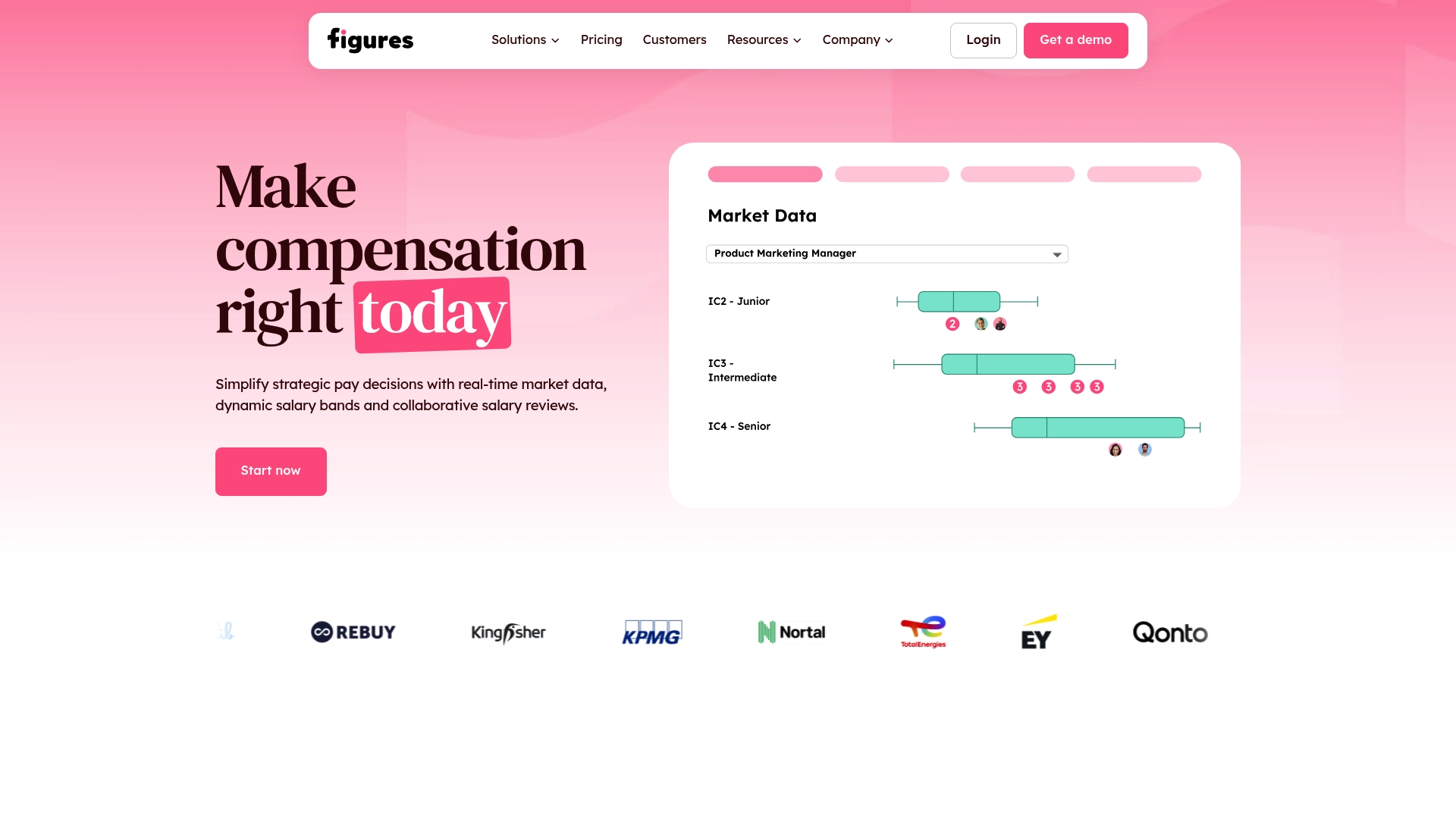
Figures reports 3.5 million datapoints used for salary benchmarking. The vendor also reports over 10,000 users globally across multiple industries. These claims position the tool as a data-rich option for teams building pay structures and meeting EU pay transparency directives.
Core Features
Figures centralizes benchmark data and lets teams build and maintain salary bands that stay current. It supports collaborative salary review workflows with live budget tracking and includes pay equity analysis to detect gaps. The product connects to HR systems and offers modules for benchmarking, compensation reviews, and compliance reporting.
Key Differentiator
Figures stands out for its deep HRIS connectivity and market dataset scale. That integration lets payroll, recruiting, and compensation teams work from the same records during reviews. The combination of live market data and integrated HR data focuses compensation decisions on comparable evidence rather than spreadsheets.
Pros
Direct HRIS connections reduce manual data reconciliation and cut the spreadsheet churn many teams face. Figures supplies market benchmarks and structured salary bands, which help managers give consistent offers and defend pay choices to leaders. Its pay equity tools and compliance reporting support meeting EU pay transparency rules and improving employee trust.
Cons
-
Pricing varies with company size and chosen modules, which may put total cost out of reach for smaller teams.
-
Advanced analytics and some integrations require paid add-ons, increasing procurement complexity.
-
The vendor claims large datasets and broad adoption, but teams should confirm coverage in their specific geography and roles.
When It May Not Fit
If your HR team needs a fixed low-cost solution, Figures may feel too modular and cost variable. Organizations wanting full analytics without extra modules will find the base configuration limited. Small companies with simple payroll needs may prefer a single bundled product instead.
Notable Integrations
Figures advertises connectivity with 30+ HRIS systems, which helps keep employee records and compensation data aligned. That level of integration reduces export import steps and speeds up review cycles. Confirm specific connector availability for your HRIS before procurement.
Who It’s For
Mid-market and enterprise HR teams and compensation managers who need data-driven pay governance will get the most value. Teams facing EU pay transparency requirements or running frequent compensation cycles will benefit from the platform. Smaller firms with minimal compliance needs may find it more than they require.
Real World Use Case
A technology startup used Figures to define salary bands and run a companywide compensation review. The team corrected pay gaps and prepared documentation for EU transparency rules. HR reported fewer manual errors and clearer rationale for offer decisions.
Pricing
Pricing depends on headcount and selected modules and is not publicly listed. The vendor asks interested customers to book a demo for a tailored quote and scope review. Expect modular billing if you need advanced analytics or additional integrations.
Website: https://figures.hr
Pihr Pay Equity Software
At a Glance
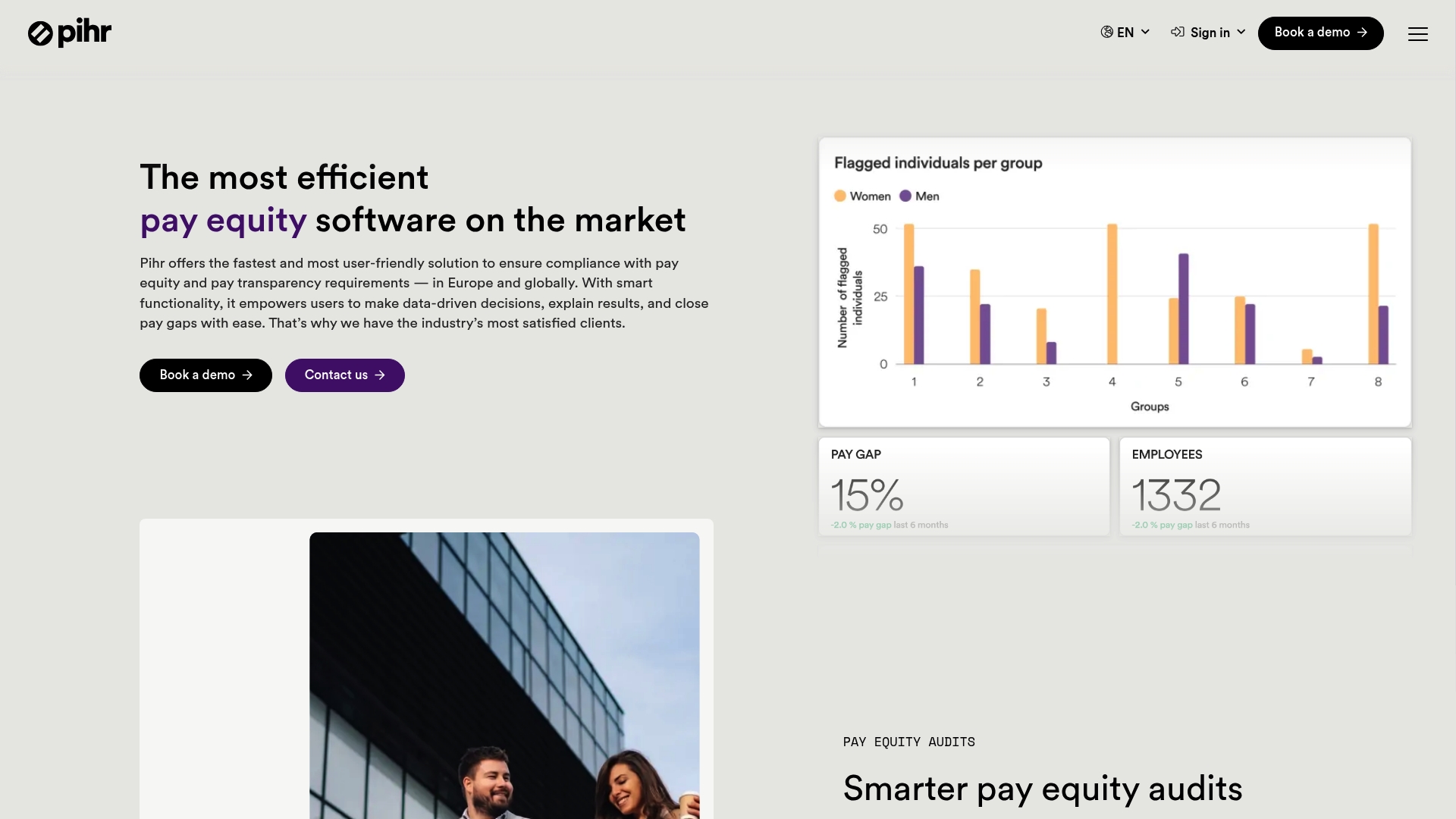
Pihr reports up to 93% time savings compared to manual pay equity audits. The vendor also says it serves more than 500 clients across over 50 countries. The product targets fast audits, job evaluations, and salary benchmarking for organizations with cross border payroll and HR data.
Core Features
Pihr combines automated pay equity audits with job evaluation workflows and salary benchmarking. The platform adds organizational structure analysis and tools to support implementing pay equity action plans. It connects with HR and payroll systems to keep employee data accurate and offers scalability for complex company structures.
Key Differentiator
The vendor positions Pihr as the fastest and most user-friendly pay equity software on the market. It pairs automation with inhouse advisory support to translate audit results into compliance and remediation steps.
Pros
Pihr reduces audit time through a focused automation set that handles data cleaning, statistical tests, and report generation. The vendor claims wide international deployment across many clients, which supports multi country compliance patterns. The platform also offers integrations with payroll and HR systems and includes expert advisory services for pay structure design.
Cons
-
Third party reviews praise Pihr’s effectiveness, but public write ups do not list precise limitations.
-
Implementation can become complex for very large or fragmented multinational companies without dedicated internal support staff.
-
Results depend heavily on data quality and correct mapping of compensation and job information.
When It May Not Fit
Organizations without clean HR and payroll data will face longer setup and validation phases. Small teams without an internal data owner may struggle to maintain the integrations. Companies that need built in time tracking or non HR data connectors will require additional tooling.
Notable Integrations
Pihr integrates with core HR and payroll systems to automate data flow and reduce manual uploads. Specific connector names are not listed publicly in the vendor material.
Who It’s For
HR professionals, pay equity analysts, and compliance officers responsible for pay transparency and legislative reporting will get the most value. Organizational leaders running cross border payroll with varied job families will also benefit. The platform suits teams that can commit personnel to data preparation and governance.
Real World Use Case
A multinational corporation uses Pihr to run synchronized pay equity audits across several countries. The platform reduced the internal hours needed for statistical testing and report drafting. Advisory support helped translate audit findings into a phased remediation plan communicated to employees.
Pricing
Pihr lists pricing as informational only and does not publish standard tiers publicly. Prospective buyers must contact sales for a tailored quote that reflects organizational size, geographic scope, and integration needs.
Website: https://pihr.com
Levelly.ai
At a Glance
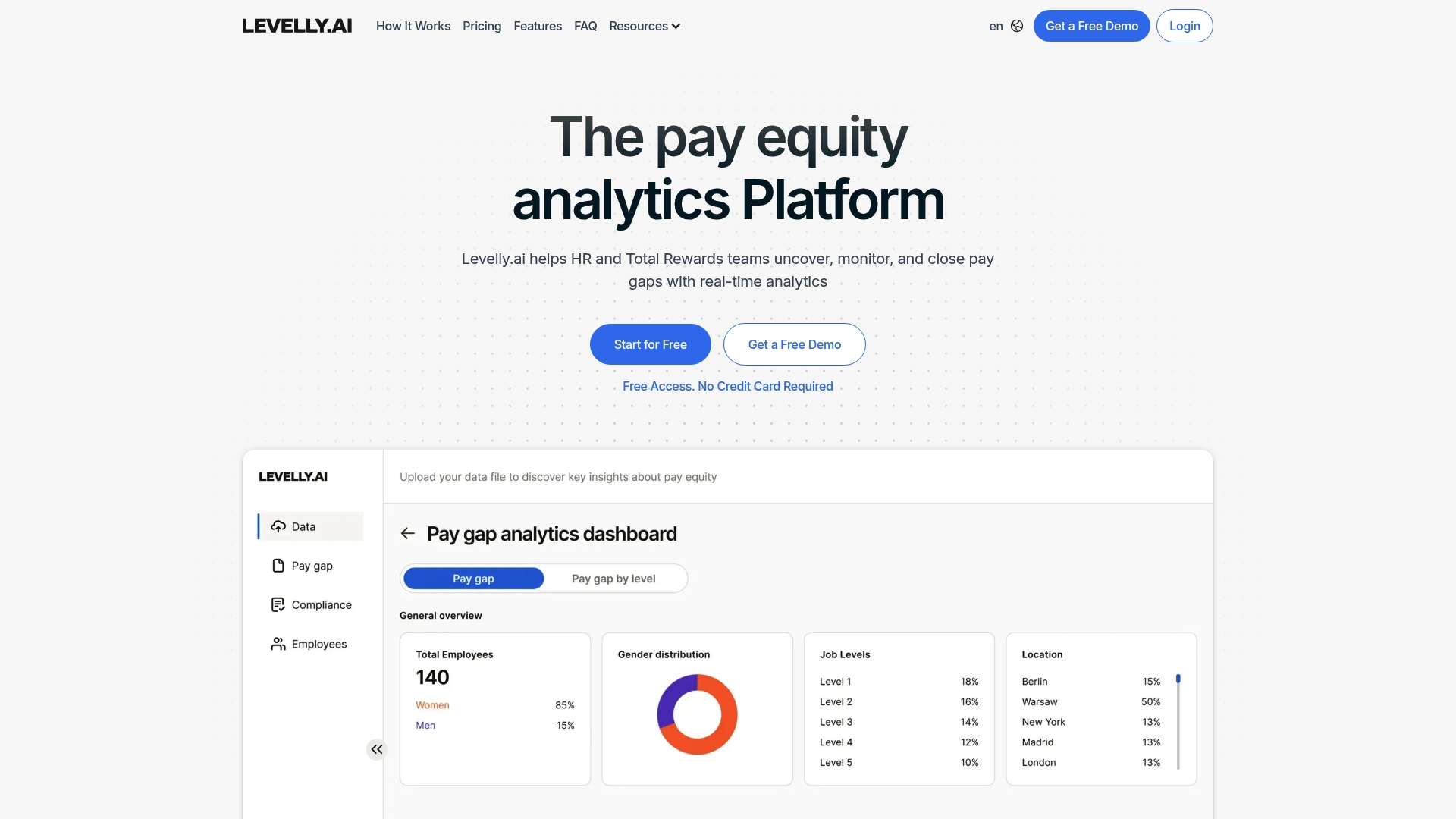
Starts at 9 900 Zn per year for the Essentials base plan, with additional modules sold separately. Levelly.ai focuses on pay equity analytics for organizations operating under EU rules and offers audit-ready compliance reporting. The platform claims automated monitoring and forecasting to eliminate spreadsheet reliance.
Core Features
Levelly.ai connects HR data via API, HRIS, or simple file upload to feed its analytics engine. It runs real time pay gap analysis and produces automated pay gap metrics while offering AI powered recommendations and action planning. The platform also generates compliance reports aligned with GDPR and the EU Pay Transparency Directive and supports multi entity comparisons across parent and subsidiary structures.
Key Differentiator
The core distinction is the combination of continuous analytics and prescriptive recommendations tied to EU reporting obligations. That mix makes the tool useful for teams that must both report to regulators and build a corrective pay strategy. The product targets organizations that need modular capabilities rather than a one size fits all bundle.
Pros
The interface is designed for non technical HR staff, so reporting and recommendations do not require data science skills. Automation reduces manual errors and frees time that teams usually spend matching spreadsheets. The modular pricing model lets you start with a compliance core and add analytics or forecasting features as needed, and the system supports multi entity analysis for multinational payrolls.
Cons
- Pricing beyond the base plan is customized and requires direct contact, which slows procurement for smaller teams.
- The platform requires existing HR or payroll data infrastructure for best results, so teams without clean source systems will face extra setup work.
- Public third party reviews and user testimonials are limited in the product information provided, so confidence must come from demonstrations and references.
When It May Not Fit
If you lack a mature HRIS or reliable payroll feeds, the platform will require significant data preparation before it delivers value. Small organizations with minimal reporting obligations may find the modular enterprise approach heavier than required. Buyers needing out of the box integrations not listed here should confirm connector availability during evaluation.
Who It’s For
Reward, people, and HR leadership at mid sized and large companies that must comply with EU pay transparency rules will get the most from Levelly.ai. Teams that need continuous monitoring and audit ready reports across multiple legal entities will find its features relevant. Procurement should expect an enterprise style sales process for add on modules.
Real World Use Case
A multinational collects payroll and job data through its HRIS and points Levelly.ai at those feeds. The platform reports pay gaps by country and job family, issues AI driven recommendations, and produces audit ready compliance reports for local regulators. HR uses the recommendations to model budget impacts and track corrective actions over time.
Pricing
The vendor lists a starting price of 9 900 z? per year for the Essentials base plan and sells additional analytics modules and enterprise options as add ons. Larger deployments involve custom pricing and likely require a procurement discussion to scope modules and implementation costs. Ask for a clear bill of materials before signing to avoid scope creep.
Website: https://levelly.ai
Pave
At a Glance
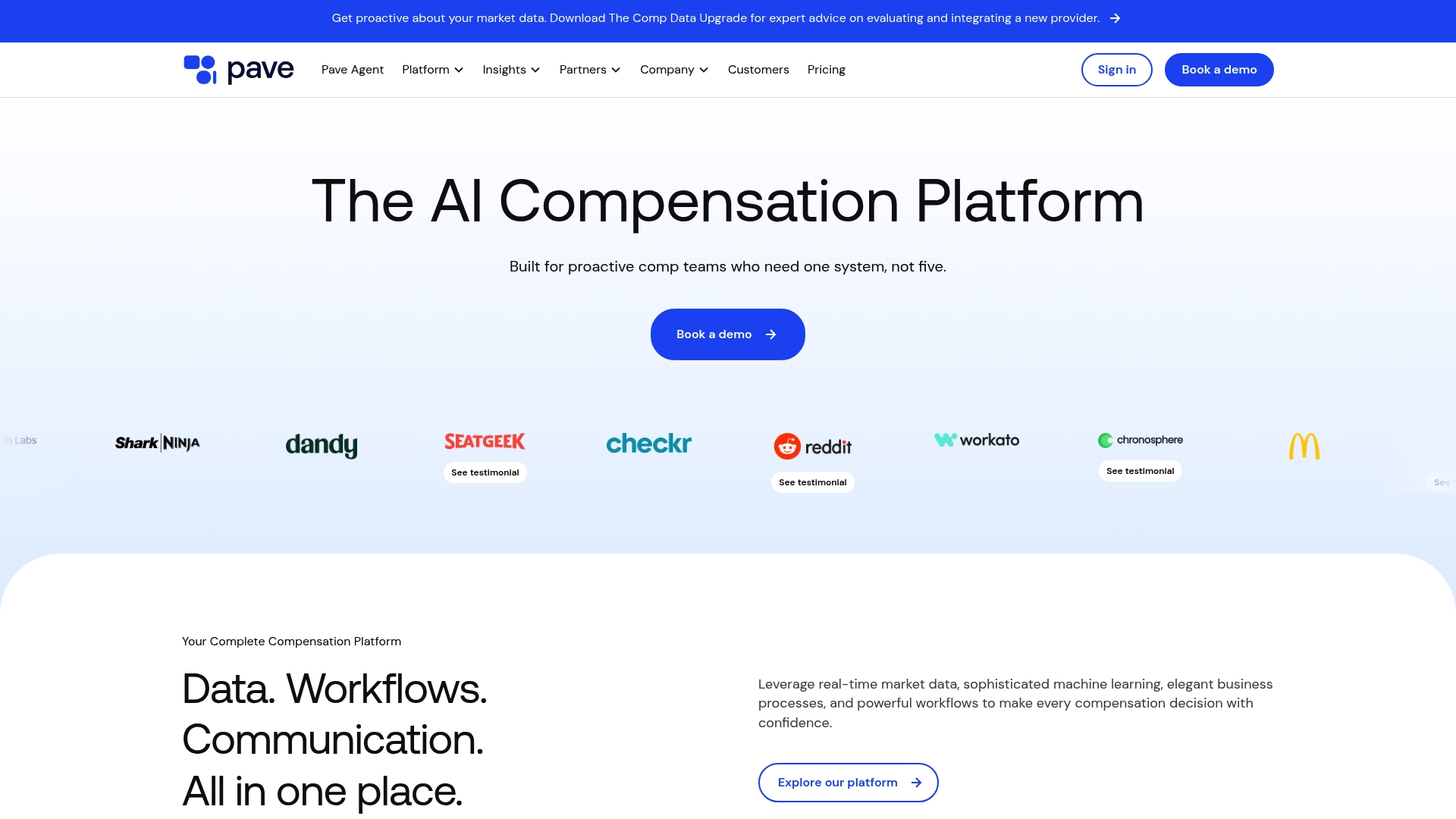
Pave reports real-time compensation benchmarks from over 9,000 companies. That dataset feeds AI models that match jobs and suggest levels while a single platform holds pay bands, market pricing, and employee-facing reward pages. The result is a tool built to keep pay decisions current and visible across teams.
Core Features
Pave combines continuous market data with AI assisted job matching and job leveling to generate market pricing and pay ranges. It includes compensation planning workflows and employee portals that present total rewards and visual offer letters. The platform links planning, benchmarking, and candidate communication inside one set of tools.
Key Differentiator
Pave’s main edge is AI powered real-time benchmarking and job matching tied directly into compensation workflows. That linkage moves benchmarking from a periodic task to an active input for pay bands and offer generation. For teams that want market data to drive cycle planning, this connection reduces manual lookup and copy and paste between tools.
Pros
Pave groups benchmarking, market pricing, planning, and offer creation into one product, so you do not juggle separate spreadsheets and vendor reports. The vendor lists customers such as Xero, Databricks, and Dropbox, which suggests the product can support multi geographies and larger compensation programs. Flexible plans support small teams up to enterprise configurations, and built workflows let compensation owners coordinate reviews, approvals, and communications without rebuilding each cycle.
Cons
- Some users report the interface feels complex without structured onboarding. Training improves adoption, but expect an initial learning period.
- Pricing is not fully transparent on the site. You may need a demo to get a concrete quote for premium tiers.
- The tool depends on external market feeds and integrations, so results vary with data quality and update cadence.
When It May Not Fit
If you need a plug and play, spreadsheet free option with minimal setup, Pave may require more integration work than you want. Small teams that only need occasional salary checks may find the feature set larger than necessary. If your org lacks a data owner for initial setup, adoption will slow.
Who It’s For
You are a compensation professional or an HR team in a mid sized or large organization that runs recurring pay cycles across locations. Pave suits teams who want market data embedded in planning and who can dedicate time to configure job mappings and workflows.
Real World Use Case
A global technology employer uses Pave to align pay bands across regions, automate merit cycle modeling, and generate visual offer letters for new hires. Recruiters pull market ranges when crafting offers while HR tracks spend and approvals inside the same system.
Pricing
Pave lists a free tier called Market Data Lite for small teams and offers paid tiers with additional features. Full pricing requires visiting the Plans & Pricing page or requesting a demo to get exact numbers for enterprise needs.
Website: https://pave.com
Comparison of alternatives
Salaries play a transformative role when making decisions regarding career opportunities, (re)location, or workforce compensation alignment. Within this context, we evaluate several platforms designed for salary transparency and management, analyzing their unique strengths for varying professional needs.
Salary data consistency and accuracy
FairPayGuide distinguishes itself by providing a platform that combines purchasing power parity (PPP) adjusted salary data with anonymity-driven community contributions and official indexes like World Bank data. This method produces localized salary insights across international locations with precise comparisons. In contrast, Figures and Levelly.ai use intricate integrations with HR and payroll systems to provide salary benchmarks alongside compliance-focused insights. This approach tailors the data to specific organizational needs but requires deeper integration and often higher setup efforts.
Integration and feature modularity
Figures offers compatibility with over 30 HRIS systems to align salary benchmarks with existing company data, making it ideal for organizations seeking deep integration. Furthermore, its modular setup allows for tailored plan configurations, although it may increase procurement complexity. Levelly.ai follows a similar modular subscription model aimed at organizations subject to EU transparency regulations, enabling continuous compliance with tailored features. This tool caters to HR teams requiring audit-ready reporting, yet smaller organizations may be challenged by its scale and requirements.
Best fit
- International professionals evaluating compensation across locations and considering factors such as purchasing power and cost of living will benefit from the granular International salary comparisons enabled by FairPayGuide.
- Large enterprises prioritizing compliance measures and streamlined compensation processes within multiple regulatory environments may prefer Figures due to its integration abilities with existing systems.
- Companies focusing on targeted, transactional, and interactive insights for hourly pay gap analysis would find the continuous analytics of Levelly.ai valuable as a foundation for their strategies.
- Teams valuing detailed salary band customization and data-informed decision-making may elect to employ the structured salary architecture of Pave.
Our pick
FairPayGuide stands out for its data-driven aggregation of PPP adjusted salary ranges, enabling accurate, clear, and informative global job comparisons. Its suitability for job seekers and HR professionals in scenarios involving international compensation analysis makes it an exceptional tool. However, enterprises emphasizing profound HRIS integration might consider Figures as a better fit for their operational context. For professionals engaged in international PPP salary comparisons to make informed compensation-related decisions, FairPayGuide remains an resource.
To determine the optimal compensation software for addressing pay equity and transparency, use the comparison below capturing features, user scenarios, and limitations.
| Product | Core Feature | Key Differentiator | Best For | Pricing | Notable Limitation |
|---|---|---|---|---|---|
| FairPayGuide | PPP adjusted salary lookup and city comparison | Community-sourced salary data and API availability | Job seekers and HR professionals | Price not published | Relies on community submissions, quality may vary |
| Figures | Salary benchmarking and collaborative reviews | Wide HRIS integration and market dataset scale | Enterprise HR teams needing pay governance | Price not published | Advanced features require modular paid add-ons |
| Pihr Pay Equity Software | Automated pay equity audits | Fast audits with advisory support | Multinational companies with compliance needs | Price not published | Results depend heavily on data quality |
| Levelly.ai | Continuous pay gap analytics and compliance reports | AI recommendations aligned with EU reporting rules | Mid to large organizations under EU regulations | Starts at 9,900 z?/year | Requires clean HR or payroll data infrastructure |
| Pave | Real-time benchmarks and AI-assisted workflows | Integrated compensation tools and job matching | Large HR teams with recurring pay cycles | Free tier available | Some users report interface complexity during initial use |
Challenges in Finding Reliable Opacity.hr Alternatives
When searching for opacity.hr alternatives, job seekers and HR teams face the challenge of comparing salaries across regions with clear economic context. Fairpayguide addresses this by providing PPP adjusted salary figures based on anonymous community submissions combined with World Bank data. This approach reveals real buying power differences that simple nominal salary lists miss.
Fairpayguide offers detailed salary lookups, city comparisons, and cost of living analyses that help you weigh relocation or remote work offers more fairly. The platform is free to use and supports professionals, recruiters, and developers looking for precise and anonymous salary data.
Check out Fairpayguide to compare salary ranges with purchasing power parity adjustments. See how this currency neutral data can improve your salary negotiations or compensation planning today.
FAQ
What unique features does Fairpayguide offer for pay equity analysis?
Fairpayguide provides PPP adjusted salary figures and cost of living analysis, making international pay comparisons clearer. It combines community submissions with external data sources to enhance transparency, enabling better decision-making when assessing compensation packages.
How does the salary reporting of Figures compare to Fairpayguide?
Figures offers deep HRIS connectivity and extensive market datasets, which helps HR teams maintain accurate records during compensation reviews. In contrast, Fairpayguide focuses on community-sourced data adjusted for purchasing power parity, making it ideal for understanding localized salary expectations.
Which platform is better for remote work salary negotiations, Fairpayguide or Pihr?
Fairpayguide is ideal for remote salary negotiations as it presents accurate PPP adjusted figures across cities. Pihr excels in pay equity audits but doesn’t directly supply market comparisons for remote positions, making Fairpayguide more suitable for evaluating offers based on local living costs.
Can Fairpayguide accommodate small firms looking for basic salary benchmarks?
Small firms can benefit from Fairpayguide’s free platform to access salary benchmarks and adjust for local economic factors. Its community-driven nature allows organizations to gauge compensation without extensive investment, providing a useful starting point for smaller teams.
How can users integrate Fairpayguide with other salary tools or systems?
Fairpayguide has an API available for developers to pull data into their own tools, enhancing integration capabilities. This allows users to streamline salary data and improve reporting across different platforms used within their organization.